After three years of working for one of the country’s most innovative investment companies, Kosy Diamonda felt it was time to strike out on her own and build Dropper, a startup that connects chefs to customers looking to purchase food in bulk.
We talked to her about the lessons she learned from her time at Bamboo, how budgets have helped her become a better founder, and her tips for joining the right team.
Hi Kosy, could we get to know you a bit better?
Hi, I’m Kosy Diamonda Okoye, a writer, podcaster, project manager, and now startup co-founder. I lead operations as the COO of Dropper.
Tell us about your first job.
My first job was an internship for a small startup in 2019. I was hired as a marketing intern but wound up in customer service, operations and on the product team. Because it was a small startup, I had to wear multiple hats. In 2020, I got an offer to work as the executive assistant to the COO of Bamboo and decided to go face that new challenge. I did a lot of learning and growing in that role.
What do you do for work now?
Right now, I lead day-to-day operations as the co-founder and COO of Dropper. I still wear many hats at my startup, ensuring we are delivering outstanding service experiences to our customers.
What is Dropper?
Dropper is a bulk meal delivery tech company. Our app connects customers to chef-run kitchens that prepare meals in bulk on demand.
How long has Dropper been in operation?
Dropper, as a bulk meal delivery service, has been in operation since the 1st of March 2024.
What has the reception been like since you launched?
We launched the beta version of the app with friends and family first. The reception we got was positive and rather optimistic. It gives me joy to say that even now, that hasn’t changed. Everyone who has come across the product so far has been excited about the idea, most of them moving on to download the app and becoming paying customers.
We knew there was a market opportunity with the steady rise in food prices, but getting validation from people who went on to become live users was exciting. Within one month of launching, we saw hundreds of downloads of the app.
How Babajide Duroshola Built a Career by Following the Money

What was the eureka moment that made you realise that Dropper could become a scalable, revenue-generating business?
Dropper didn’t start as a bulk meal delivery service. We’ve pivoted a couple of times as we explored the market, trying to find the right product-market fit. We wanted to make it extremely easy for people to get their daily necessities dropped at their doorstep, but we weren’t quite sure what the best solution would be. We explored options like cargo, groceries, fast food, and restaurant delivery, and we never stopped talking to our users.
Soon, we realised we had a common reality — the prices of food in Nigeria are getting more expensive, and restaurants, in a bid for survival, aren’t making it any better. We thought that there had to be a better way for professionals like us to affordably and conveniently feed themselves with quality meals without having to exhaust their entire earnings. So we tested out the idea with more people and got the same reaction from literally everyone. They loved and wanted the service. After speaking with different chefs and realising they all had solid businesses with a growing customer base and positive unit economics, we knew we had found our solution.
Angel Anosike, on The True Cost of Nollywood Glamour

You left paid employment to build with your startup. What has been the biggest mind shift you have had to make since you joined Dropper?
I’d say my biggest mind shift came when I realised how much of my free time I had gotten back. I felt like I no longer had an excuse to not pour my heart, time, and effort into accomplishing the goals I’d set for myself. I no longer had the luxury of being a “task rabbit,” working on tasks handed to me, but would have to think critically, make hard decisions, learn a whole lot more, and grow quickly to build something great for myself and the people I want to serve.
Before starting Dropper, you worked closely with Yanmo Omorogbe of Bamboo, who is a much-celebrated female co-founder. How did working with Yanmo influence you as a female co-founder?
Yanmo re-opened my eyes. Working with her made me realise that there are doors of opportunities open to us no matter where we find ourselves. We just have to be mindful enough to identify them and brave enough to walk through them. Before I started working with her, my dreams were just dreams. But three years by her side, watching her accomplish so much at such a young age, made me realise I had the power to make my dreams my reality as well. I just had to find the strength to take the first step in the right direction and the will to keep going.
You don’t run Dropper alone. Tell us about your co-founder(s)
To be honest, my co-founders are like my brothers. I couldn’t have asked for better partners. They’re both kind, hard-working individuals who are passionate about what they do. DC, our CEO, leads business and strategy. He’s a well of great ideas and could probably sell you just about anything. Bright, our CTO, is DC’s younger brother. He’s a full-stack Software Engineer and is literally the driving force behind Dropper’s engineering excellence.
How does one become a co-founder, and how is it different from starting a business?
I don’t know that there is a one-size-fits-all guideline on how to become a co-founder. Some people start off as friends, realise they have a shared vision and then decide to start a business together. Some, like me, are scouted based on common interests, shared values, and skills. Starting a business requires you to do a lot of the initial groundwork to lay the foundation of the business and figure out the right trajectory. This is usually one of the hardest parts. It’s even harder if you have to shoulder all the burden alone. A co-founder lightens the load as each contributes unique strengths that complement those of the others, leading to a well-rounded team.
How long did it take you and your co-founder to transform an idea into a fully functional business?
I’d say it took us about six months of brainstorming, building, and testing to arrive where we are today.
How did working for a finance company that traded in stocks and investments shape your approach to launching and running your own startup?
Working at Bamboo taught me a lot – from how to hire and retain the right talent to the importance of effective financial management. I’ve found myself applying this knowledge in my new role. However, working at Bamboo especially shaped my view on data. Leading fintech companies are heavily reliant on data analysis to make informed decisions regarding product development, marketing strategies, pricing, customer acquisition, etc.
I’ve carried this emphasis on data-driven decision-making into my startup journey, leveraging analytics to drive strategy, optimise processes, and measure performance. I’ve found that the more information you have on your target audience, the better you’ll understand them and the better you’ll get at finding and serving them.
Habib Olawale Is Making Self-Expression Profitable with Smileys

Running a startup is hard; launching one during a period of economic uncertainty must be harder. How do you & your team future-proof your business against economic anyhowness?
First, yes, I agree. Launching a startup in this period of economic uncertainty is certainly hard. However, the best institutions are born in times of adversity. Real problems surface during periods like these, and if effectively solved, such solutions are capable of standing the test of time.
To ensure we do not just survive but thrive, we pay close attention to our unit economics. Staying on top of these numbers to quickly identify and address any inefficiencies and adapting quickly to navigate changing market conditions are the major ways we keep our heads above water. We also implemented a pricing strategy that reflected the value we provide to our customers. After we found that most customers are willing to pay for solutions that genuinely address their needs, especially if accompanied by exceptional service and support, we committed to going the extra mile to attain excellence and charging the reward for doing so. Also, to maximise our resources, we prioritise lean operations. This means being mindful of where we allocate our time and money, focusing only on activities and initiatives that directly contribute to our KPIs.
Do you have a preferred method of saving?
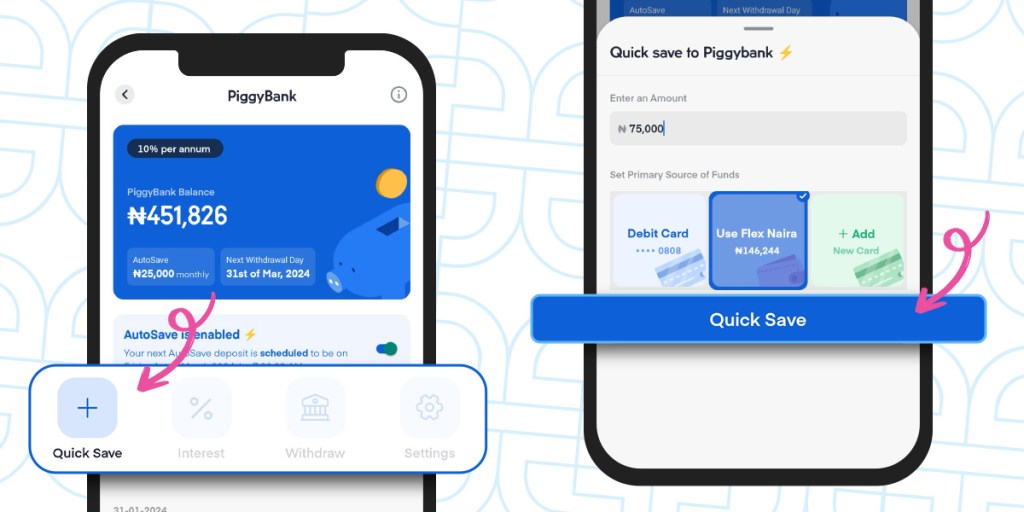
I prefer to save with fintech platforms with the most competitive interest rates.
Do you have a long-term savings/investment strategy for staying financially secure through your career and after?
Yes, and my strategy is relatively simple. I’ll let my money work for me and leave the rest to God. Cash that is buried produces nothing. If you know the parable of ten talents, then you know exactly what I mean. Besides my monthly budget, all my idle cash is tied to one investment or the other. Either US stocks, ETFs, a savings account with mouth-watering interest rates or other people. I’ve also developed a habit of only spending on things that are absolutely necessary and will budget over and over again until I’m convinced that the final list holds my most important priorities. Everything else gets saved or invested.
Are there any financial decisions you have made over the course of your career that you are very proud of?
I started investing in stocks and saving idle cash in accounts that offered great interest rates.
Were there any financial mistakes you made at the beginning of your journey that you wish you could correct now?
Budgeting and spending money on projects without a clear picture or understanding of the vision and ending up blowing a lot of cash repeating tasks that could have been done right the first time with better planning.
Where do you see Dropper in 5 years?
I’m very passionate and optimistic about Dropper’s future. Five years from now, we will have honed our solution in solving this problem effectively for Nigerians and, then, the black community at large.
What financial tips would you like to share with other young professionals who want to build a financially secure career?
Finance may seem boring at first, but strive to understand it. Find a teacher if you must. You’ll sleep better knowing you’re effectively managing every penny you’ve been blessed with. Invest properly now and reap the harvest tomorrow.