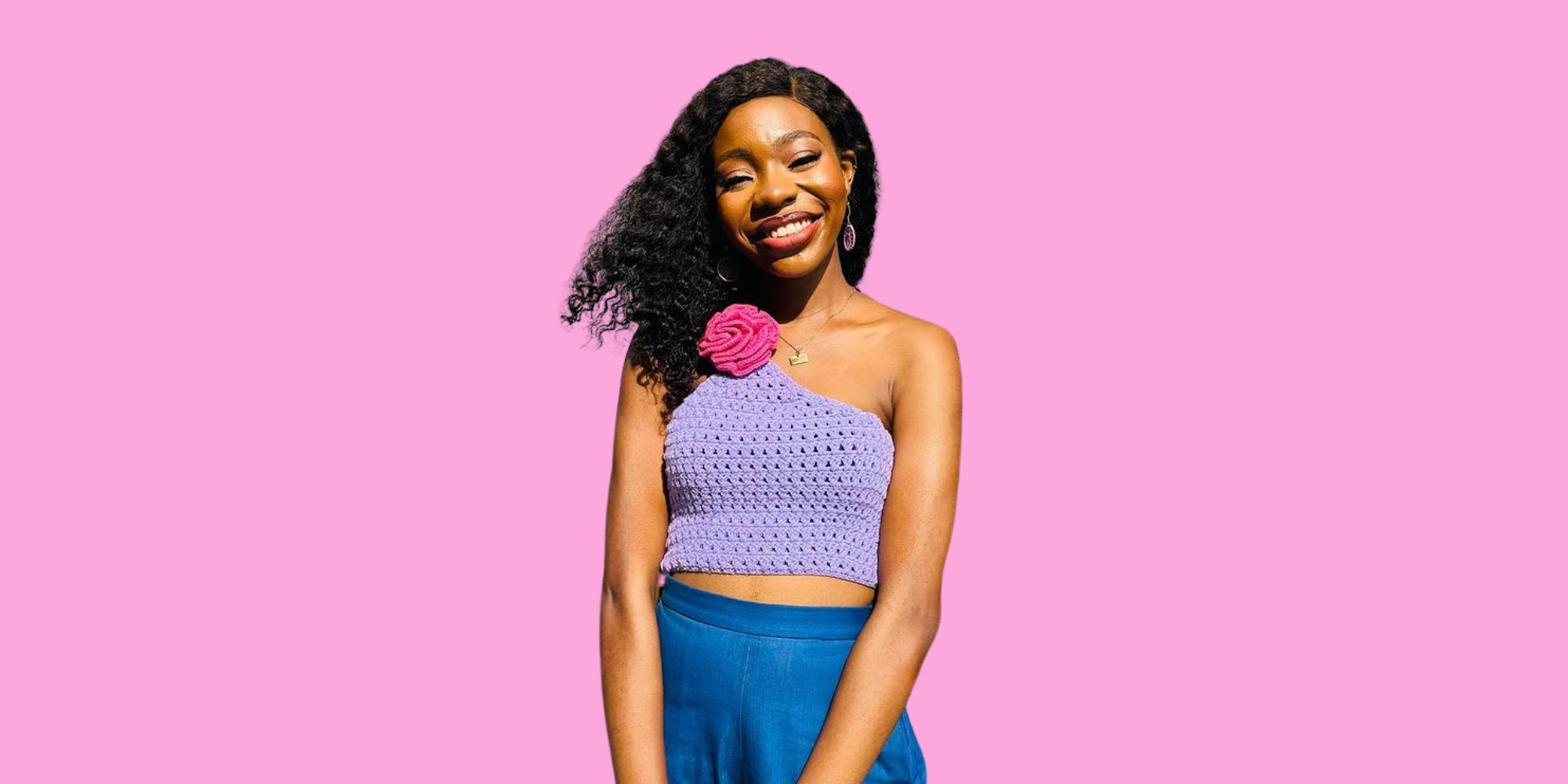
Lizzy Adedeji believes that building a business involves more than creating a product or offering a service. She has spent the last eight years building 21 Wool Street, a knitwear brand and a community of customers, collaborators and enthusiasts who love craftsmanship & crochet.
21 Wool Street has attained virality among black influencers and become one of the pioneers of knitwear on the continent. PiggyVest sat with her to discuss building a community around craftsmanship, scaling in a niche market and saving for the rainy day.
Hi Lizzy, please introduce yourself and your business?
My name is Elizabeth, and I’m the creative director of 21 Wool Street. It’s a fashion brand that creates timeless and functional crochet wear and accessories for the fashion-conscious woman.
21 Wool Street is a very distinct name for a fashion business. What inspired it?
Oh yes! People get fascinated whenever they hear or see the brand name. Honestly, the name kind of jumped at me.
I wanted a name that captures different aspects of the brand: the youthfulness of it and the fact that we create our product using natural materials. Youthfulness is important to me because the brand is for the young and young at heart. Media has always perpetuated the stereotype that crochet or knitted products are for old people, but that’s untrue. Flowing from this, we are focused on creating a community and sense of belonging within the brand. Everyone is welcome to wear a 21 Wool Street piece.
Not many people design using crochet, what was the appeal for you?
I’ve been crocheting since I was young. It wasn’t just about crochet but being able to create something from scratch using a ball of yarn or any other rope like material. I like the fact that crochet is unique — different from anything most people could have in their wardrobe. It adds more character and a sense of uniqueness to the person’s style.
The beauty of crochet is how timeless and sustainable it is, so you’re not just thinking about today, but you’re certain you’re buying something that will last a very long time.
Also, the versatility of crochet is my favourite thing. I love that you can literally create anything using crochet as the medium.
How did you get your first customer?
Pre-2016, I often made crochet pieces for myself — from phone accessories to tops. In 2016, I think, a friend saw me wearing one of my halter tops and wanted one for herself. So I made it for her, packaged it in one of those shiny gift bags and sent it to her. From then on, like magic, people just seemed to want crochet tops.
At what point did you decide to build it into a legitimate business?
Post 2016, I was doing a full-time job while running the business on the side. I was mainly focused on creating tops, bikinis and dresses at the time. Then I started taking some training around the business of fashion, and that helped me diversify my thinking around the products I created.
I decided to try my hand at producing crochet bags, which led me to create the Jadesola bag during the pandemic. It became quite popular, and a lot of people started purchasing from the brand both locally and internationally. It really encouraged me to focus more on the brand and see it as more of a business than a passion project or side hustle.
I took more training and realised I could build an empire out of this. I also studied other brands in the industry who took their fashion brand seriously and realised there was a demand for this, and it was something I could provide.
Have there been any challenges in building your business over the years, especially financial ones?
There are several challenges but access to funds is probably the biggest. I started the business with my capital. However, I’ve been opportuned to receive grants that helped along the way. There’s still a lot more that funding can do to help the business; I’m not quite scratching the surface when it comes to the scale I’d like to reach in the short and long term.
With more funds, I’d be able to build a team, which will make production faster. I’d also be able to import more quality crochet products, which is another pain point. Visibility and marketing are certainly other areas of challenge. But I’m navigating these one step at a time.
Money Lessons From ‘All’s Fair In Love’

It’s very hard for small businesses, especially one where everything is handmade, to secure funding. What was it like to receive a grant from Femme Africa for your business?
It definitely is. And I’m eternally grateful to Femme Fest and similar programmes that provide women with grants to run their businesses efficiently.
In building 21 Wool Street from the jump, I’ve been particular about the impact I want to have on my customers. It’s not just about selling to them. For me, the customer journey doesn’t end there. It’s about building a community, staying close to the women I serve and providing products that address their pain points.
Amongst other things, I tried my best to communicate that in my application process. Value is very important.
One of the ways the Femme Fest grant is transforming my business is in helping us hit some of our goals for 2024, such as building our digital and physical footprint through marketing and other channels.
You seem to collaborate a lot with other female designers. How do you choose who to collaborate with, and how do you handle the financials of collaborating as a small business?
I’m very passionate about seeing other women win, so doing my little part in helping other brands by working together and collaborating is key.
It’s really important that the brands I collaborate with align with my brand’s vision and overall vibe. I also look at how our brands complement each other in terms of product and how we can help each other reach our target customers.
8 Profitable Businesses To Start With 100k In Nigeria
So I ask myself these questions: Can customers see themselves styling our pieces with their product? Do we have a similar target audience? That guides my decision to collaborate.
When it comes down to pulling pieces from us, the other brand handles the logistics and any other costs or vice versa. We also might decide to offer our customers shopping discounts to get customers to crossover to the other brand.
How do you plan and budget for your business, especially with how crazy inflation has been in the last two years?
One thing I like to do is create and set aside a monthly budget. I also started buying materials in bulk quarterly or when necessary, so I don’t have to worry about materials. Luckily, I haven’t had to buy anything in a while, so most production for custom orders come from available materials.
We’ve had to adjust our prices a couple of times in the past two years to beat the inflation or at least give us a fighting chance.
Buying urgent items the moment we need them also helps, because I realise the price can go up by the next week
You showed your work at the 2023 Crochet Fashion Week in America. You were the only African designer on the lineup. It’s a real big deal for any fashion business, especially a crochet business. Why did you agree to do it?
It was a big deal. It looked like a great opportunity to put the brand on an international stage.
Before then, I had taken a break from creating crochet wear and was mostly focused on the accessory side of the brand. CFW seemed like a great platform to push myself and the brand, create a collection and represent the Crochet fashion world as a Nigerian living in Africa.
What Is The Best Business To Start With 50k In Nigeria?
The goal is to become a global brand, especially given that we have customers from across the world, and CFW is one step in that direction.
What were the cost implications of showing at crochet fashion week and do you think it made sense in the end financially?
This was in 2022, so I paid a showcase fee of $500 and also had to cover shipping to America and back to Nigeria, which was about ₦380,000. Luckily, they had a yarn sponsor for the fashion show who was kind enough to ship yarn to everyone. So I didn’t have to worry about purchasing yarn.
Financially, not really. But I think it was a great opportunity to put the brand out to an international audience.
For me, there are investments I make in the business that might not see short-term rewards. I do these for the future and for recognition, which is important from a distribution and prestige POV.
Do you have a preferred method of saving?
I save 30% of my monthly profit on PiggyVest.
Are there any lessons you have learned from your work as a crochet designer that have improved your relationship with money?
Selling my products for what it’s worth. I used to be afraid to put prices on my items, but I realised how important it is to overcome that fear and help some customers understand the value of what they are buying through how we communicate and market the brand.
Do you have a long-term savings/investment strategy for growing 21 Wool Street into a bigger, more financially resilient business?
I’m still figuring that out as we go. I’m not particularly great with numbers, so I definitely hope to have an in-house accountant in the team that can advise and help inform such decisions.
But so far, one of my investment strategies includes investing in low to medium-risk plans that can help us yield returns on profit that would otherwise just be lying around in the account. PiggyVest’s Investify has been helpful with that

Are there any financial decisions you have made as a small business owner that you are very proud of?
Hiring more staff to ease production, and building our inventory (products and materials). We built out our inventory late last year to prepare for December pop-ups. Some pieces didn’t sell, and while I was initially sceptical about spending so much, it paid off because I didn’t have to worry about buying things in January and was able to sell some of what was available (both online and through our stockist) in the first two months of 2024 without producing new items.
Were there any financial mistakes you made at the beginning of your journey as a crochet designer that you wish you could correct now?
Yeah definitely. Financial mistakes are inevitable. There was a time I would spend so much on certain materials to test and produce, but the pieces would either not sell or we’d come to find out that yarn wasn’t of great quality to crochet with.
What financial tips would you like to share with other young designers who want to build a financially sustainable business?
I will say invest in yourself and the business. Taking courses or attending trainings to help you improve your knowledge about the business of fashion goes a long way and will give you a sense of direction as you’re figuring it out.
Understanding the financial aspect first is important, and it is one thing I wish I had done earlier. Have a financial advisor; this could be an accountant friend/family or anyone that can guide you in making better financial decisions..
Also, collaborating can be very cost efficient, so collaborate as much as you can with other designers, stylists, photographers and so on that align with your brand.