On The Money is a Piggyvest editorial series that explores the personal stories and lived experiences behind the data points in the annual Piggyvest Savings Report.
Joseph* believed nightmares only happened while asleep, until his real life became one. A year ago, he was a different man; full of dreams, great intentions and insider information about a trustworthy “investment” that promised 100% returns in 7 days. It felt like a chance — maybe his only one — to give his wife and young children a better life beyond their cramped one-bedroom apartment, devoid of running water, somewhere in Ogwashi-Uku. He needed more than his teacher salary could provide. So he opened a loan app. And with one click, he made the worst decision of his life.
“I think someone placed a curse on me,” is Joseph’s conclusion. For two months straight, his phone has rung nonstop. Day and night. He has since turned off his notifications, but every incoming message fills him with dread. He’s become a shadow of himself, a crackling ball of anxiety wrapped in thinning flesh. And the worst part? There’s no end in sight.
This wasn’t greed; it was hope. Joseph invested in a dream, clinging to desperate hope for a miracle that would erase his family’s years of financial struggle. Joseph’s story, sadly, is not unique. Across Nigeria, countless individuals are seduced into debt, chasing elusive jackpots and the promise of “doubling their money” through high-risk schemes disguised as once-in-a-lifetime opportunities. And this more often than not ends the same way: tears, regrets, and devastating consequences.
Why Does The Allure of Overnight Fortune Have A Chokehold on Nigerians?
The country’s rugged economic terrain has raised the barrier to financial stability in Nigeria. On one hand, roaring inflation steadily erodes our purchasing power; on the other, stable employment is harder to find than a needle in a haystack. This is why the idea of quick wealth often feels like a welcome respite amid the noise.
For many Nigerians struggling to survive day-to-day, jackpot schemes that promise exponential returns or life-changing windfalls seem like the only ticket out of the rat race. These temptations take many forms: persuasive and deliberately misleading recruitment pitches for Multi-Level Marketing (MLM) schemes; SMS ads from telcos encouraging you to dial some USSD code for “quick loans”; jarring website banners urging people to access loans; the unspoken cultural pull of gambling and sports betting; and sleek, sophisticated platforms offering too-good-to-be-true investment returns, often endorsed by charismatic celebrities or influencers.
Insights from the Piggyvest Savings Report 2024 reveal that a little over 2 in 10 Nigerians are in debt. While nearly half of this group owes money to family and friends, 12% and 15% of them owe money to cooperative societies and loan apps, respectively.
Consider Grace*, a Kogi-based tailor, who was introduced to an “investment opportunity” by her neighbour. The return was dazzling: invest ₦50,000, recruit two people, and watch your money multiply as your “downline” grew. She began to imagine all the possibilities her new fortune could unlock. A bigger shop. Real financial freedom. These dreams felt worth borrowing the capital needed from her cooperative society, and she was convinced this was her breakthrough. But on an odd Saturday morning, the WhatsApp group admins for this investment platform she had recently joined vanished into thin air. No explanation. No updates. Just silence and chaos.
Interestingly, Grace is one of the lucky ones. Secondary school teacher Joseph has only sunk deeper into debt since borrowing ₦50,000 from a loan app last November. “You only need to open an account with ₦150,000,” he was told. He had ₦50,000 in savings. His wife borrowed ₦50,000 from her cooperative. Joseph borrowed the last ₦50,000 from a loan app to complete the total investment. With one week left before salary day and a strong sense of conviction, he created a profile, converted his naira to LTC, and joined the platform. It seemed legitimate: an ad network where users earn by sharing links daily. Meeting a daily quota, they were told, would double their investment in seven days.
Joseph’s plan was simple: repay the capital, reinvest the profit, and repeat until they could breathe easier. “I don’t normally fall for scams,” Joseph told Piggyvest, “and I believed this one was legit because it felt like I was working for my money.” But when the seven-day window passed and withdrawal delays were explained away by vague memos, he knew something was off.
The platform’s problems didn’t change his obligations. Loan repayments still loomed. He tried to meet them with his ₦57,000 teaching salary, but each month, the gap widened, so he returned to the loan apps to stay afloat. With interest rates soaring as high as 40% and inflation dragging him down like dead weight, Joseph now owes ₦395,000, despite his best efforts not to drown.
These individuals aren’t inherently reckless. They are hardworking people driven by the need to provide for their families, escape poverty, and achieve a level of financial security that seems impossible through conventional means. The added psychological appeal of sidestepping years of arduous effort to reach that one big win and transform their lives faster often seals the deal.
Ponzi schemes are the Achilles’ heel of the Nigerian masses. Our recent history with them took a dark turn in 2015 with the emergence of a platform called MMM, which promised Nigerians 30% monthly returns under the guise of communal financial support (Get Help, Receive Help). The platform was launched by Russian con artist Sergei Mavrodi, and it came at a time of economic despair and recession.
For many, it seemed like a timely lifeline. From families to market women, civil servants, and university students, Nigerians bought into the scheme, despite warnings from regulators. Everyone wanted to be one of these success stories, with rent paid, school fees covered, and quick financial wins.

Then, in December 2016, the platform imploded, freezing accounts due to “technical issues.” Millions were left stranded. The aftermath rocked the nation: life savings vanished, debts piled up, and families were torn apart. But Nigerians, characteristically optimistic in the face of crisis, didn’t lose hope. Instead, this hope morphed as new schemes sprang up almost immediately, promising even faster returns under different names and faces.
Some posed as forex companies. Others hid behind agricultural investments or crypto platforms. From Twinkas to Racksterli to MBA Forex — which alone swallowed ₦213 billion — each scheme rode a wave of public desperation and digital virality. By 2022, losses from these fraudulent ventures had ballooned to over ₦900 billion, with only a handful of arrests and even fewer convictions.
With little recourse and minimal accountability, the cycle of deceit continues. Fueled by economic instability, a desire for upward mobility and an enduring belief that wealth, no matter how fleeting, is always worth pursuing, Nigerians persist.
The Unseen Grip of Social Pressure
If we look harder, we’ll find that behind the persistent appeal of these schemes lies a more complex web, one woven with social media pressure, aspirational elitism, and a cultural reverence for wealth, whether ill-gotten or not. In a nation where success is not just celebrated but also expected to be visible, flashy, and instantaneous, the pressure to look like you’re winning weighs heavily on many Nigerians.
Platforms like Instagram and TikTok amplify this; we see our peers who appear to be “living it up” (flaunting flashy cars, travel, or designer labels) with little to no insight into how those lifestyles are funded. Unfortunately, with these kinds of convincing displays of wealth, we suspend all critical thinking and jump at the next fast-money opportunity.
Recently, this tension came to a head in the viral Nepo baby vs. Lapo baby discourse on Nigerian Twitter. A few days of interesting conversations exposed the stark contrast between those born into privilege and have endless buffers for failure (NEPO babies), and the (LAPO babies), those born into scarcity, where one small mistake can lead to generational setbacks.
But beneath the humour was a sobering truth: for many Lapo babies, there are no safety nets or fallback plans if things go wrong. Just the ever-present weight of financial pressure and the drive to break generational cycles. When you grow up with so little, you start to see these risky schemes as your only shot at catching up. That pressure to “blow” drives many into the arms of these scams.
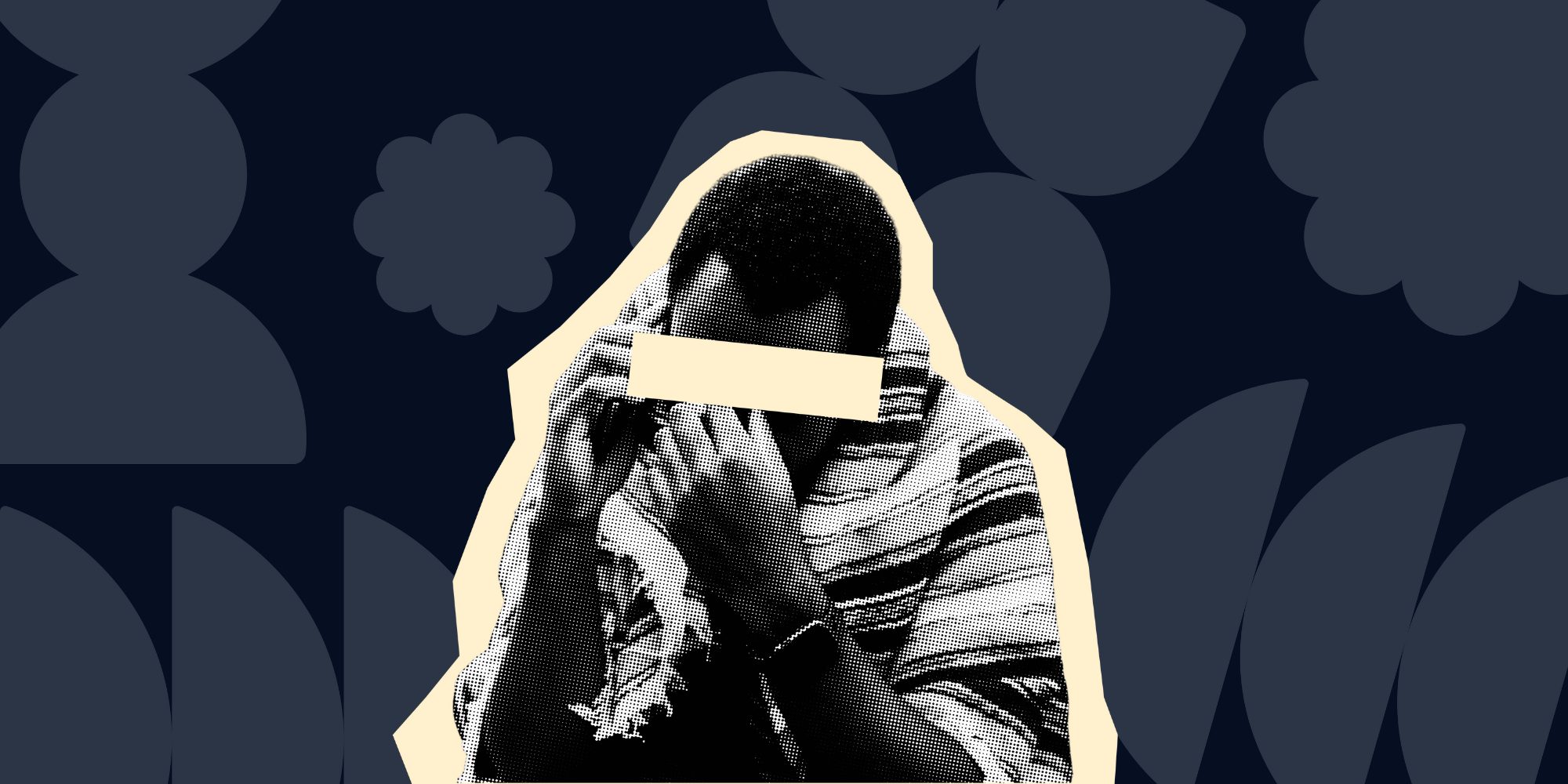
For Jide*, a software developer, it was his unrealistic aspirations and indiscretions that did him in. “I always dreamt of a big society wedding as a man. I have affluent friends and wanted my wedding to stand out. I gave myself a deadline to marry in 2026, and I needed to catch up financially.” He had discovered Forex trading through a friend, and for a while, traded on a demo account. “I thought I was strong-willed, but I started seeing all these signals that would’ve done well if I’d entered, so I rushed into trading with real money, believing that if I entered them, I’d be able to make a profit.”
What began as one trade quickly snowballed. Soon, he was emptying his savings — in both naira and dollars — in pursuit of that one big win. Then came the loans. One after another. Jide borrowed just over ₦1,000,000 in chunks of ₦200,000 from six different places to fund a quick trade. However, that initial sum ballooned to ₦22,000,000 over the course of four months, from June to October 2024.
“I had to start taking more loans to repay these loans, because these people would not hesitate to make an obituary for you and send it to all your contacts,” Jide told PiggyVest. “I couldn’t even bring myself to calculate the real debt. At some point, I had up to seventy loan apps on my phone. And the worst part is that they share your data among themselves, so I was always getting loan offers, and because I needed money urgently, I would put my head there.”
The real trap for Jide was the crushing interest rates that reached as high as 40% weekly. ₦200,000 became ₦280,000. ₦100,000 turned into ₦140,000. Jide had been borrowing money from his friends to survive the weekly deadlines of these loans. He even came clean to his MD, who then gave him ₦3,000,000 to repay these debts without fully understanding the full scope of the problem.
“I lost weight ehn. It was when my family and bosses started getting messages that my brother forced me to come clean. We created an Excel spreadsheet, and that’s when I learnt the full amount. When my fiancée learned of the full amount, she cried.”
His brother urged him to inform his employers; a necessary risk, given Jide’s managerial role at a fintech. His MD was disappointed as he thought the matter was already resolved. “They thought I was gambling. I had to find the words to explain that out of ₦12 million, I only spent ₦1 million. The rest was just taking loans to pay back loans.”
Thankfully, the management agreed to support him with a loan that covered the full debt, though the terms were steep. His salary would be slashed by 35% for two years, and he would forgo his end-of-year bonuses. He went from earning ₦800,000 monthly to ₦520,000.

But Jide had lied to everyone about the full extent of his debts. As it turned out, during this ordeal, he convinced himself that taking out one big loan would finally fix everything. So he turned to a microfinance bank with a lending arm, and borrowed ₦3,000,000, a loan that would require him to repay ₦8,000,000 over three years. But even that wasn’t enough. When the pressure mounted again, he took ₦5,000,000 from another MFB, this time signing up to repay ₦9,000,000 in three years.
“I was ashamed to tell these men that I looked up to about these big loans, and since I thought the timelines were flexible, I didn’t need to bother them with it.” Thinking he could pay the loans off himself, Jide tried, but his ₦500k salary didn’t even make a dent. So he started borrowing again.
By January 2025, all hell broke loose again. It turned out Jide had been borrowing since October just to cover his lies. The threatening calls and messages returned, but this time, they were more aggressive. “They even came to my office at some point to look for me. Luckily, I wasn’t around.” They sent vicious threats to his family and MD. That was when both his bosses and relatives finally uncovered the full extent of his situation. His new debt? ₦38 million.
But unlike before, there was no sympathy left. Everyone pulled away. Jide lost the trust of his managing director, a man who had once taken him as a son. “My brother was furious. But all he told me was to make sure I stay alive, and stop taking their calls. My life has been a living hell.”
Things have since quieted for Jide, as most of the debt collectors have stopped calling. But it came at a cost. He deleted his social media accounts, changed his number, and left home for a while just to find a shred of peace. Still, the damage had already been done.
This relentless Fear of Missing Out (FOMO), coupled with a deep-seated cultural deference to wealth, regardless of how it’s acquired, has led many into ruin. The “I better pass my neighbour” mindset convinces people that one day, they too will stand out from their peers. No one wants to be left behind while others seemingly escape hardship. And why wouldn’t they? Especially since in many Nigerian contexts, money doesn’t just talk, it silences reason and commands obedience.
Is Enduring Hope Evidence of A Systemic Failure?
The unrelenting belief in financial miracles is really about survival. Most Nigerians like Joseph and Grace are navigating an economic environment where the odds are stacked against them. With 133 million multidimensionally poor Nigerians, salaries failing to keep pace with inflation, small loans coming with interest rates of 40%, and stable employment seeming out of reach for most, these schemes that promise extraordinary returns begin to feel like the solution to systemic poverty.
Yet, what feels like a solution is often a trap. Poor regulatory oversight allows fraudulent platforms to spring up overnight, peddling hope through social proof, aggressive marketing, and influencer endorsements. The sheer brazenness and ease with which they operate reflect a systemic failure in financial regulation, public education, and consumer protection.
And by the time the victims realise the truth, they’re often too ashamed or defeated to seek redress, and are left trapped in cycles of debt, stigma, and mental and emotional exhaustion.
Breaking the Cycle
To break this dangerous cycle, solutions must directly address the realities faced by those caught in it. Honest and transparent conversations about growing wealth the right way, such as Zikoko’s Naira Life Conference, along with financial literacy initiatives, are crucial for putting things into perspective. We should also consider delivering these financial insights in languages, platforms, and formats that resonate with everyday Nigerians. Additionally, practical education on red flags, critical thinking around money, and accepting realistic timelines for financial growth are key.
But all of this is futile if regulation is slow to catch up. We need faster crackdowns on scammers, stricter oversight of lending apps and investment platforms, and harsher penalties for financial fraud.
Beyond institutions, we must also reframe the cultural narrative. For many, such as Jide or Joseph, the pressure to “blow” is rooted in social comparison, fear of being left behind, and a desperation to rewrite their family’s financial story. The only way to achieve sustainable change is by redefining success culturally, not as pomp or ostentatious displays, but as stability, delayed gratification, and incremental, sustained growth. As a society, we can no longer glorify wealth that lacks a clear source of backing.
Support systems, ranging from community savings groups to mental health services, must also be strengthened to help victims recover, not just financially, but also emotionally.
If we truly desire transformation as a nation, we must first rid ourselves of the “jackpot obsession.” The real miracle does not lie in sudden wealth; it lies in making informed choices and learning to build wealth and financial safety nets that are not dependent on blind luck.