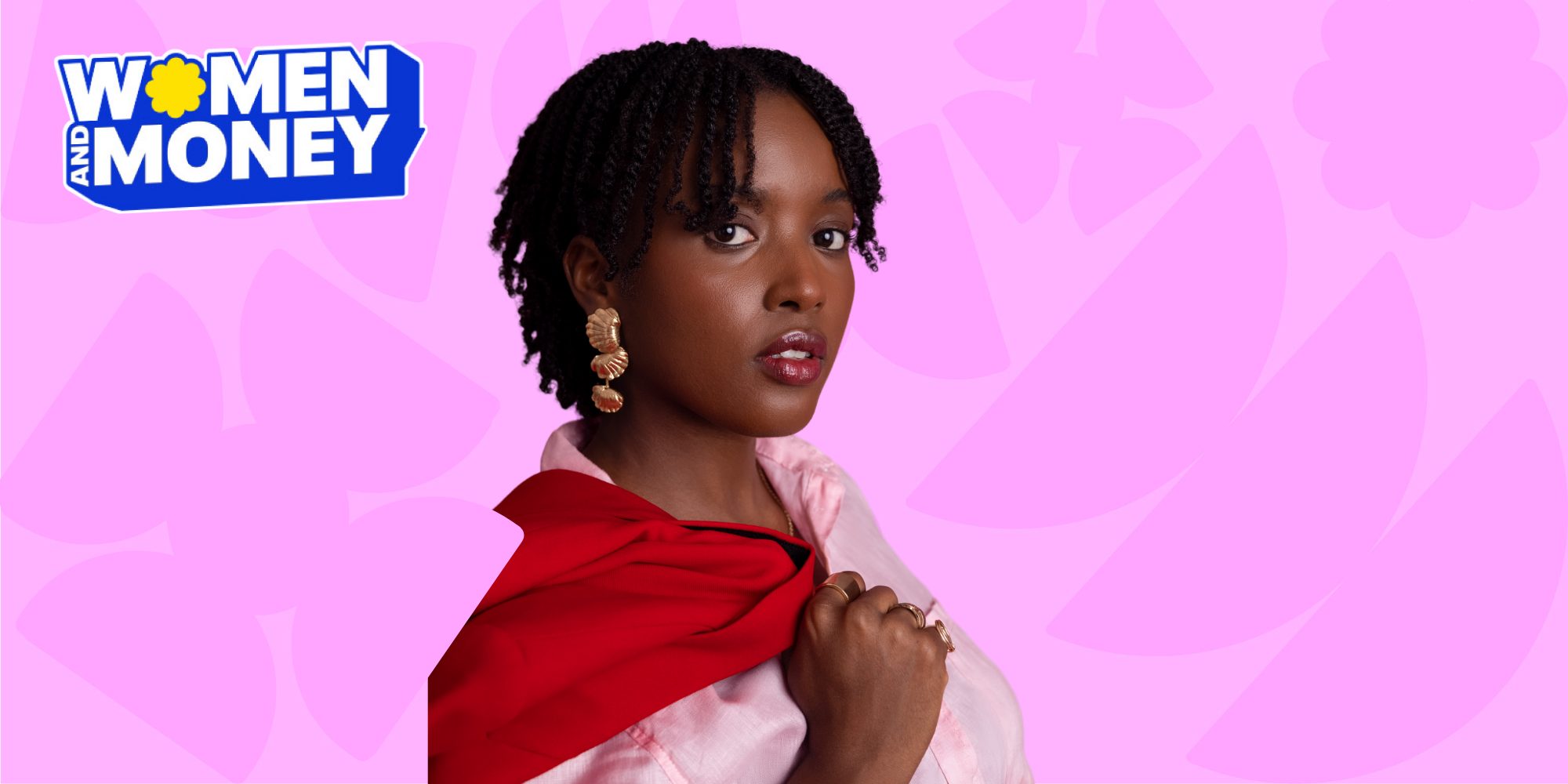
Women & Money is a monthly PiggyVest series that explores the relationship between real Nigerian women and money. This series sheds light on money, career and business from a female perspective.
For this month’s Women & Money, we spoke to Jesimiel Damina, a filmmaker and co-founder of Neptune3 Studios. In this interview with Piggyvest, she discussed growing from a creatively nurtured childhood to establishing a film studio focused on content for teens and young adults.
Jesi also shared insights into transitioning from a creative to a business mindset, the vision for Neptune3 Studios, gender-specific challenges, and the importance of advocating for more women in technical film roles.
Please introduce yourself.
Well, my name is Jesimiel Damina, and I’m a filmmaker. I’m a co-founder of Neptune3 Studios. We make teen and young adult films and series. I started as a writer and remain a screenwriter today, but I’ve grown in the industry and acquired numerous skills over the years.
I also work as a producer, creating a wide range of original content for film and TV aimed at young adults. I am also a musician. I have original music under the name Jesi, and those are just some of the things I love doing.
What was your relationship with family, your sisters, and also with money as a young girl?
I grew up in a really close, loving family. That’s something that’s stayed consistent from childhood till now. I have one older and one younger sister, and my parents are, thankfully, still alive and very present in our lives.
As a child, I never really thought about money. I felt well taken care of, and I had experiences that shaped my worldview, like travelling. My first international trip was to South Africa, and then when I was nine, we went to the US. Times were different then, and opportunities felt more accessible.
Did things change as you entered the university?
Not quite. Being three girls, survival wasn’t something we thought about. It wasn’t until after university that my older sister, Jemima and I started asking, “What do we want to do with our lives?” That’s when we thought of film. Interestingly, it was my dad who encouraged us to pursue it. He believed the Nigerian entertainment industry would soon blossom, and since we already had an interest, he nudged us in that direction. That advice really set us on the path we’re on now.
At the time, we didn’t understand what running a business meant. We had studied creative fields, but we were still dependent on our parents. Our first real taste of earning came during NYSC, when we received allowances and had to be responsible for ourselves. My mom also used that time to push us to manage personal expenses. Looking back, she’d actually been preparing us since secondary school by giving us daily or weekly lunch money and teaching us to make it last.
In university, we had monthly allowances and quickly learned the consequences of overspending. If we blew our money shopping, Mom would say, “I already gave you your money for the month, and there’s nothing else.” That forced us to budget.
Of course.
We were shielded for a long time, but thankfully, it wasn’t a disadvantage, so we caught on quickly. Managing money is still an ongoing journey. Knowledge about things like investments isn’t something that’s handed to you. No one teaches it in school, and you often have to discover it for yourself: “Oh, I should learn about stocks or investments.”
So it’s been a gradual shift, from being protected to figuring out how the world really works. I’m not struggling, but I’m consciously learning. Is a salary the only way? Are there other paths to building wealth? Those are the questions I’m asking now, compared to the sheltered place I started from.
Could you walk me through your educational background prior to starting your career?
I studied Computer Animation for my bachelor’s degree at Full Sail University in Florida and graduated in 2015. Later, I did my master’s in Creative Writing, also at Full Sail, but this time online from Nigeria. That allowed me to combine my studies with my NYSC service, which I completed during that period. I graduated in 2018.
Would you say your parents influenced your decision to study a creative degree?
Yes, definitely. I’ve always had a deep creative interest. I used to draw, write, and sing, so it was clear I was naturally artistic. What my parents did was observe what came naturally to us and encourage it. My dad, in particular, would say, “Go into entertainment.” They never forced us into fields we weren’t good at or passionate about.
Initially, I was planning to study Law, and my sister wanted to pursue International Relations. We were just following the conventional path of the art student. However, my parents suggested that we explore other opportunities. That’s how we found our way to Full Sail University.
We didn’t start there, though. We first went to India, to the Digital Academy in Mumbai, where we began a three-month certificate course; my sister in Film, and I in Screenwriting. That was our first experience in film school. We didn’t complete the program because, while we were there, we discovered Full Sail. From that point, we made the transition, sorted admissions, and moved to Florida.
You started music long before filmmaking. How did that journey begin?
It really started with writing. I used to create little poems and short stories and share them with my sisters, friends, and classmates. One day I sang one of my poems, and that’s how I realised, “Oh, I like writing songs.” From there, I started songwriting, first with my older sister and later with my younger sister, Jeiel, when she grew up. That’s how we formed Triple J Plus, singing inspirational and Christian pop music.
I was always the one most invested in it. Even after we grew up and went to school, I continued to pursue music. I began writing original songs for our films and series, incorporating music into the stories I wrote. Since I was handling screenplays, I’d often create musical characters to keep that balance between film and music.
Even now, music is something I can’t let go of. I’ve neglected it a little, but I’m coming back to it. Hopefully, I’ll release something this year or early next. Music will always be a part of me.
Were you exposed to the music business at any point, or was it strictly music?
Honestly, it was strictly music. My parents handled everything: bankrolling, production, and even distribution. I can’t tell you how the CDs were made or how they got out there; they just appeared. My mom and dad were really passionate about supporting us, so we never had to deal with the business side.
We were in Uyo at the time, which didn’t have the kind of network Lagos offers, so everyone was just figuring things out. That’s why I never really understood how the industry worked.
Even now, as I make music independently, I still can’t say I fully understand it. I just pay for services, put the songs out, and that’s it. I’ve never really promoted music on the radio or worked with a label. It’s always just been independent stuff.
How do you make money as an indie artist?
I don’t. I’ve never monetised my music. The Nigerian music industry isn’t straightforward. Unless you’re signed and have a team orchestrating the business parts for you, it’s a lot of work. And for me, that would be a distraction from filmmaking, which is what actually pays the bills.
Currently, I create music purely out of love for it. If I have extra money, I’ll work with a producer, release the song, and let whoever enjoys it enjoy it. It’s mostly for me. Maybe down the line I’ll explore it as a business, but for now, it’s just something I do for myself.
You talked about being in Uyo at some point. Is that where you grew up?
Yes, I was born and raised there. I only left about four years ago.
Being raised in a slower-paced city compared to Lagos or Abuja, would you say that shaped the way you think about creating?
Definitely! I don’t think I have hustle culture in me, and that’s the main difference. Uyo gave me a more regulated approach to life. I don’t chase things just for the thrill or the benefit; I focus on what aligns with my journey and with God’s plan for my life.
That’s not to say I don’t hustle. I work hard, I take on challenges, and I go after what I believe is mine. But I won’t do it at the cost of my dignity, self-respect, or faith.
10 Of The Best Books About Money For Nigerians To Learn About Saving, Investing, And Wealth Building
Let’s talk about filmmaking. You and your sisters co-founded Neptune3 Studios seven years ago. What was the vision behind it?
That’s a great question. It ultimately stems from our upbringing. We grew up watching a lot of Disney Channel, Nickelodeon, and even TBN, which used to air kids’ and young adult shows. That content shaped us, so when we decided to enter the film industry, the question was: What kind of films do we want to make?
The answer was clear; we wanted to reach teenagers and pre-teens, the same age we were when those shows inspired us. It wasn’t about recreating those exact shows, but about giving young people the same sense of possibility, positivity, purpose, and wholesomeness we felt growing up. That’s what set the direction.
After finishing our first degrees — Jemima in Film and me in Computer Animation — we asked ourselves, “Okay, what’s next?” And we came up with the phrase, “The Disney of Africa.” That’s what we wanted to be.
And if that was the goal, then we had to return to Africa to work with Africans. We wanted Nigerians on the big screen, Nigerians in international spaces, and global audiences watching us the way we once watched them.
That was the heart behind starting Neptune3. It wasn’t about building a company for its own sake, but about creating the kind of shows we wished we had growing up. That’s how Best Friends in the World was born. And when it took off, we knew we had something real. From there, it became our mission to fill that space with more content for teens and young adults.
It’s been seven years. Looking ahead to the next seven, what do you hope to accomplish?
For us, it’s not just about what we hope to accomplish; it’s about what we will. We want Neptune3 to become a household name, not only in Nigeria but also across Africa and internationally. With the kind of content we’re creating, the opportunity for something global is very real, and we’re determined to stay the course.
During that time, we also want to make a real impact. Our target audience should be able to say their lives or perspectives were shaped by what we produced. Financial success is also a key component. Beyond sustaining ourselves and our business, we also want to reinvest in the industry, funding and creating opportunities for others.
Our goal is to be major players in Nollywood, to the point where the industry can’t be spoken of without mentioning us. Ultimately, we aim to collaborate with global companies, such as Disney, Sony, Universal, Netflix, and others that may be relevant at that time. That’s the level we’re aiming for.
The journey hasn’t been without its challenges. What would you say have been the most significant hurdles in your seven years?
The real crunch has come in the past couple of years. The biggest hurdle has been realising just how much we still have to learn. Not just about office spaces or even building teams, but mainly about leadership. You can have a great vision, but if you don’t know how to communicate and execute it, you can still run everything into the ground.
We started as pure creatives, and I remain a creative at heart. But running a business requires a different skill set. It’s about learning how to make quick, decisive calls, even when you’d rather sit and fine-tune endlessly. We’ve had to bring in business-minded people who can complement our creative strengths and help us move forward. That adjustment, shifting from “I’m a creative” to “I’m a creative running a business”, has been an enormous hurdle.
Then there’s the fact that what we’re doing at Neptune3 isn’t conventional. There’s no playbook. We’re dealing with a new audience, a new style, and a space that doesn’t come with clear guidelines. Even the things I learned in school in the US aren’t directly transferable here. The Nigerian market is different, and adapting to it has felt like starting from scratch. So, really, the biggest hurdle has been twofold: adapting to our environment and learning how to balance creativity with the demands of running a business.
As a woman in business, would you say there are any challenges you’ve faced that are gender-specific?
Not necessarily with me directly, but I’ve seen it happen around me, especially with my sister, Jemima, who directs all our projects. There have been moments on set where, if the Director of Photography were a man, crew members would defer to him instead of recognising her authority.
I recall an incident during the production of Best Friends in the World Season 2. We had brought in more hands to move faster, but some of the men we hired didn’t respect our knowledge. They tried to turn the set into a boys’ club. The energy shifted; even the actors noticed, and we cut it off immediately. We let them go because no talent is worth disrupting the safe space we’ve built.
Women & Money: Ore Eni-Ibukun Is Prioritising Work-Rest Balance

As you should.
I’ve also seen men try to exert authority in more insidious ways. Once, a crew member was making passes at actresses and even told them that their chances of getting a role depended on being in his good graces. Thankfully, some of the women came to us and spoke up. We dealt with it instantly. We fired him on the spot and reassured the women that this is their house, a woman’s house, and no one gets to intimidate them here.
That’s one of the things that has protected Neptune3: we are three sisters, all women, and we understand the importance of creating a safe space for women to work. If you bring bad energy, misogyny, or disrespect, no matter how skilled you are, you’re out. There are plenty of talented people out there. What matters is the environment we’re building.
And honestly, working with women has been beautiful. There’s no gatekeeping, just generosity and knowledge-sharing. Of course, we work with men too, but the expectation is clear from day one: you must respect the women on set. If you can’t take correction from a woman, this isn’t the place for you. That’s been our approach, and thankfully, I haven’t experienced anything worse than those incidents.
How do you approach hiring and building your team? Do you have an in-house team now, or do you hire based on the needs of each new project?
That’s part of the structure I mentioned earlier, figuring out what actually works for a company like ours. Initially, it was just my sisters and me running everything, and we would hire a crew only when we had a production. Now, things look very different. We’ve built an in-house studio team, though they’re not a production crew. They handle the business side, including brand marketing, business development, structure, and finance, as well as some creative roles such as graphics, editing, and writing. When it’s time to shoot, we still hire production crews separately because that’s a different skill set altogether.
When it comes to hiring, merit is everything. It’s not about whether you’re male or female; it’s about whether you can execute, take responsibility, and fit into the role without excuses. Recently, we put out calls and made some really strong hires. One thing we’ve also learned is that protecting creatives by giving endless grace doesn’t always serve the business. If something isn’t working, we can’t continue to manage it. It’s tough, but letting go is sometimes the healthiest decision for the team and the company’s growth.
You are an advocate for women coming into the film industry, not just as actors but also in technical roles. Would you like to elaborate a bit on that?
Absolutely. I’m a huge advocate for women on the technical side of film because, frankly, it’s still very much a boys’ club. People often point out that there are now many successful female directors, producers, and writers, which is true, and I celebrate that progress.
But when I talk about women in film, I’m not just talking about producing or management roles. Producing is essential, but it’s also a role that men aren’t exactly fighting for, and it leverages the strengths that women already bring. What I’m advocating for is more women in roles such as DIT (Digital Imaging Technician), DOP (Director of Photography), gaffers, lighting, sound, and colour grading. Those highly technical, male-dominated spaces where women are still underrepresented.
The issue isn’t that women in these roles don’t exist; they do, but they’re nowhere near equal in number. And that imbalance comes from bias. There’s an ingrained belief that women aren’t suited for technical work, which isn’t true. The reality is that women often face harsher judgment when they’re still learning. Men permit themselves to fail, to be bad at something, until they get better. But if a woman stumbles, the reaction is: “See? You act like a girl.”
It’s a double standard.
And that double standard discourages women before they’ve even had the chance to improve. I was in a gender equity class recently, and when I raised this, some men argued, “But women have the same opportunities. Why don’t they take them?” That perspective shows a lack of awareness.
Think of it like secondary school sports: the courts were always filled with boys. Nobody said girls couldn’t play, but trying to join in was intimidating. And if you weren’t immediately good, the ridicule was harsher. That same dynamic exists in film. Walking into a male-dominated crew, with all the gatekeeping and posturing, can be intimidating and unsafe. Not everyone has the personality to bulldoze through that, and they shouldn’t need to.
That’s why I believe in creating women-only learning spaces where women can safely practice technical skills, make mistakes, and grow confident before stepping into larger industry spaces. I remember seeing photos of NTA training camerapeople in the North. There were rows and rows of men, with no single woman in sight. And yet people claim the industry is “balanced.” It’s not. Until we give women safe, intentional spaces to learn and fail forward, we can’t expect equality on set.
Women & Money: Why Oluchukwu Chiadika Launched Your Personal Finance Girl

Women can absolutely thrive as DOPs, gaffers, sound engineers, and colourists; I know some brilliant ones. However, to see real change, we need to equip more women with the skills, confidence, and environment that allows them to rise without being silenced or sidelined.
Looking back, are there any mistakes, financial or otherwise, that you’ve made in your career?
Absolutely. What is a journey without mistakes, especially financial ones? Even just a few days ago, I caught myself thinking, “Gosh, I shouldn’t have allowed this project to go beyond budget.” Those moments still happen. But the bigger mistakes I’ve made, particularly as a producer, really stand out because I’ve seen how directly my actions affect not just me but the entire company and the people working in it.
Sticking to a budget is one of the most challenging aspects of producing any film. As a dreamer, you always want more for the project. You want better standards, a certain look, and all the success in the world. But the reality is that discipline with money is crucial.
I’ve stumbled there a few times, mostly because I never really learned the basics of business until recently. When you enter the business world, the first rule is profitability. You may know it in theory, but applying it in practice and making actual decisions that protect profit is a different matter entirely.
Valid.
For a long time, like many creatives, I was caught up in the excitement of the process without thinking about the financial outcome. But if a business isn’t making a profit, then it’s not really a business; it’s just art or personal expression. And there’s nothing wrong with that, but you have to be clear about what you’re doing.
Those are the areas where I’ve made the biggest mistakes. At the time, they felt devastating, and I was very hard on myself. However, I’ve learned to forgive myself, move on more quickly, and make better choices. The goal now is simple: don’t repeat old mistakes. If I must make mistakes, let them be new ones that push me to grow.
Speaking of finances, what does funding look like for filmmaking and for your business? How do you typically fund your films, and how do you make a profit?
In filmmaking, you usually have to start from the end and work backwards. Before you even spend one kobo, you should already know who’s going to buy or distribute that film. Ideally, you secure a deal in advance, like a funding agreement or a pledge from a distributor. For instance, if Netflix agrees to purchase your project for a set amount, you can then approach an investor with that guarantee. The investor has confidence that they’ll get their money back because Netflix is already committed.
That’s how it works in most international markets. But here in Nigeria, it’s a bit different. Until recently, Netflix wasn’t even in the picture. Many filmmakers would take out loans or find investors, then make films without a clear plan for distribution or revenue.
This was often driven by passion: “I’ve had this dream, I want to tell this authentic story.” But who’s going to watch it? How do you plan to distribute it? Sometimes they’d say “festivals.” Okay, but why aren’t you marketing it specifically to the audience that would connect with it? Without that clarity, you’re gambling, and investors have little reason to trust they’ll make their money back.
I’m taking it your approach is different?
Yes. At Neptune3, we took a different path. From the beginning, we’ve put all our projects on YouTube. It solved a lot of problems for us because we didn’t need to negotiate distribution. Anyone, anywhere, could watch our content with just a search. Initially, that strategy proved incredibly effective. Back then, the YouTube space wasn’t saturated with long-form entertainment, so we were able to break even and even turn a generous profit.
But the space has changed. There are more creators now, which means the money is spread thinner. I was fortunate to experience YouTube when there was an abundance, but now the challenge is to adapt. We can’t afford to be an island anymore. We’re actively exploring alternative models, including licensing deals, advertising partnerships, and product placements. Those collaborations can fund productions in a way that YouTube revenue alone cannot.
That makes sense.
We’ve had conversations with investors, but the challenge there is that YouTube feels too unpredictable. Investors want guarantees, and I can’t promise virality. I can share data — demographics, age groups, viewing habits — which is valuable, but it doesn’t satisfy investors who want concrete returns. Sponsors, on the other hand, mostly care about reach. If their goals align with our target audience, then we have a solid foundation to build upon.
For now, sponsorships and partnerships make more sense for us than traditional investments. We’re still building the right model because it doesn’t really exist yet in Nigeria’s YouTube film space. But one thing is clear: our success isn’t just measured in profit. It’s also in the reach; in the number of people we’re able to impact. For the right partners, that’s as valuable as any financial return.
While on the topic, what does financial freedom mean to you?
For me, financial freedom simply means being able to do what I want, whenever I want. I know that sounds like a standard answer, but that’s honestly how I see it. I’m not a crypto bro or someone deeply into financial theory, and I’ll admit there’s still a lot I’d like to learn. The truth is, I’m so focused on building my business and solving day-to-day challenges that I don’t always have the time to explore all the available resources.
However, when I think about financial freedom, it goes beyond mere comfort. Yes, I want to live a comfortable life, but I also want to live an impactful one. That means having enough not only for myself but also for others. It’s being able to support causes I believe in, to give back in meaningful ways, and to fund the gospel so that more people across the world can hear about Jesus Christ.
So for me, it’s not just about money sitting in an account. It’s about the freedom to make decisions without a second thought, to give generously, and to create real impact. When I can do that with ease, that’s financial freedom.
Would you say you’re making strides toward that goal? How are you approaching wealth building?
Honestly, for the longest time, it just hasn’t been a priority. It sounds crazy when you’re living in a country like this.
Personally and work-wise, I do have the basics covered, but when it comes to actual investments, I’m still in the learning stage. It’s not that the information is too complicated; it’s just that I haven’t made it a priority. Every time someone brings it up, I think, “Oh, that’s true, I should definitely look into that.” But then life happens, and it slips my mind.
I think it’s also because financial knowledge isn’t really “in your face” here. Out of sight, out of mind. I really applaud the people — both paid and unpaid — who promote financial education, as it’s not discussed enough in Nigeria. Personally, I’d like easier access to that kind of information. If there were an IG page, a subscription service, or even a simple daily text reminder breaking things down step by step, I’d sign up in a heartbeat.
That’s why conversations like this matter.
That’s right. However, the truth is that I don’t have the mental capacity right now to become a financial guru. I’m juggling too many other things. What I’d love is the A-B-C version of it, or even someone who can help me handle my investments directly. I want to make money, of course, but if it’s not right in front of me, I don’t chase it. For me, it’s really an “out of sight, out of mind” kind of thing.
What would your financial literacy score be over 10?
Honestly, maybe a two or three. It’s not even funny; I actually feel sad admitting it. I’m an educated person, but this is one of those areas where I wish I knew more. I also wish I had the enthusiasm to dive deeper, but it’s not yet in my wheelhouse. I know I’ll get there eventually, and, like you said, that’s why conversations like this are so helpful.
What financial or career advice do you have for aspiring female filmmakers, or just filmmakers in general?
Learn about the business. If you’re drawn to film, chances are the creative side will come naturally. You already love storytelling, culture, or heritage. What most of us lack is business and financial knowledge. That’s where you need to invest: take classes, pay for masterclasses, buy courses, binge YouTube videos, whatever it takes to understand what makes a film successful. You’ll quickly realise that passion alone doesn’t cut it.
It’s not really about what you want to say or how badly you want to showcase your culture. It’s about understanding your audience first: Who are you trying to reach? Why would they buy into your story? How are you reaching them? That’s the business of film. The people who succeed are those who understand that.
Take Nigerian cinemas right now. Tickets are between ₦5,000 and ₦8,000. By the time you add popcorn, it’s a luxury outing. Even the middle class can’t afford to go regularly. That tells me some people still don’t understand the business, because if you make cinema accessible to the masses, you’ll have better numbers and more success.
So, my advice is to learn the business and finances of film. I’m still learning myself, but from what I’ve seen, it’s shocking how little is talked about in our space. We need more of these conversations.