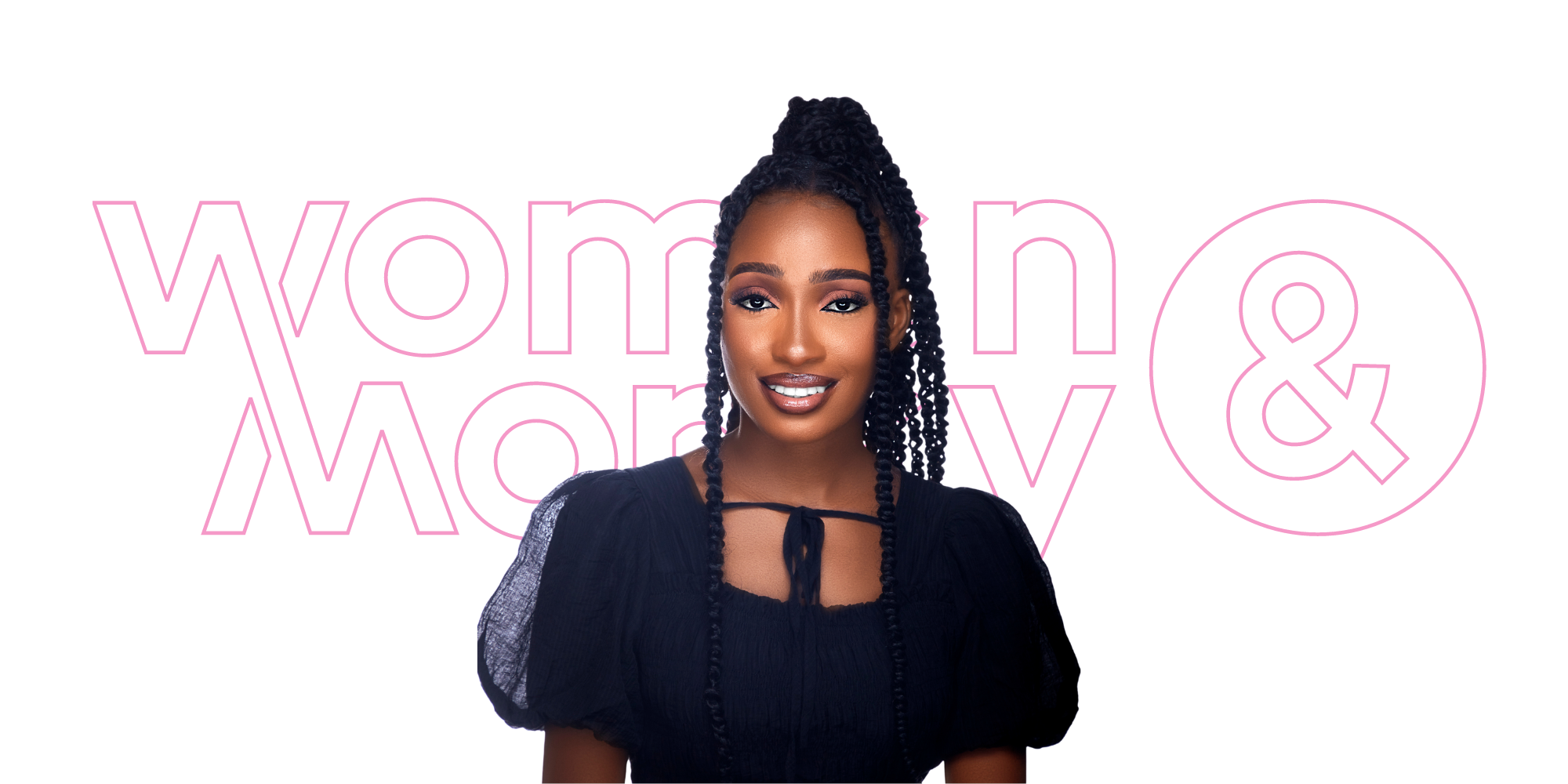
Women & Money is a monthly PiggyVest series that explores the relationship between real Nigerian women and money. This series sheds light on money, career and business from a female perspective.
For this month’s episode of Women & Money, we chatted with Chinaza Nwaeke, a licensed pharmacist and owner of the online bookstore “The Readers Hut”. In this PiggyVest interview, the 25-year-old Port Harcourt resident discusses making tough career choices, discovering PiggyVest, and the challenges of running a virtual bookstore in Nigeria.
What was your family’s financial situation growing up?
I grew up in a middle-class family. And things were definitely better then than they are now. But back then, we got everything we wanted. My dad is an accountant by profession, so he’s very big on savings, no excessive spending. I was surprised when I entered university and heard people say their parents gave them an allowance. My experience was different, from primary school, I received money based on request; I would have to state clearly what I needed and how much it would cost. It didn’t matter whether it was a ruler or an eraser; he would calculate the cost and give me the equivalent. He didn’t want it to look like he was spoiling his children just because he was doing really well. then. That influenced my money habits as I entered secondary school and beyond.
How do you mean?
I’m a fan of lists and budgets. My friends knew me; if I wanted to spend a dime, I would make a list of everything I wanted to buy.
I’m still the same to this day. I don’t spend any money without making a proper plan. I make plans for everything, from airtime and data to bigger expenses. Every year, I make a list of things I want to accomplish and tick them off based on my income.
I’m quite money-conscious. Not in an obsessive way, but I love financial stability. I like being able to account for my money. However, with the way Nigeria has been going, no amount of planning is ever enough.
Real.
Honestly. Things used to be different. I was able to start my business using my income as a pharmacist intern, and also meet my saving goals thanks to PiggyVest.
Wow. How did you find out about PiggyVest?
I’ve been saving on PiggyVest for a long time now, since 2016. In fact, PiggyVest remains one of the best apps that have happened to me. My friend Debbie introduced it to me in my second year in university. I didn’t have any savings for the first year of university, plus I still had to account for my allowance. I also couldn’t own a proper bank account so my dad opened and operated my bank account, so he saw every single debit alert.
I needed to have some money set aside, but I also couldn’t work. I went to UNN, and it was a tad remote, so there were not many opportunities for students to make a quick buck. I told Debbie that I couldn’t afford to graduate without some savings, and she told me about the app. I set it up and set up Autosave of ₦500 weekly.

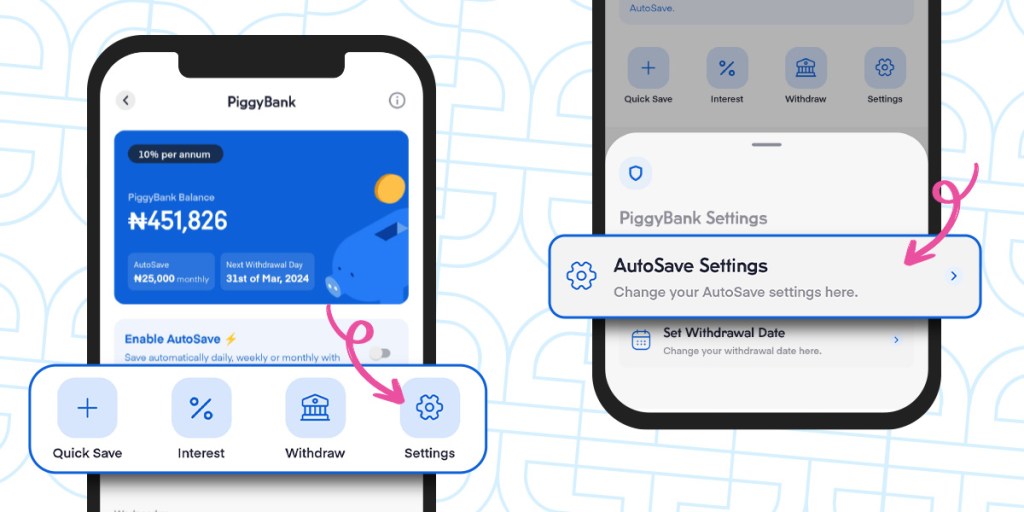
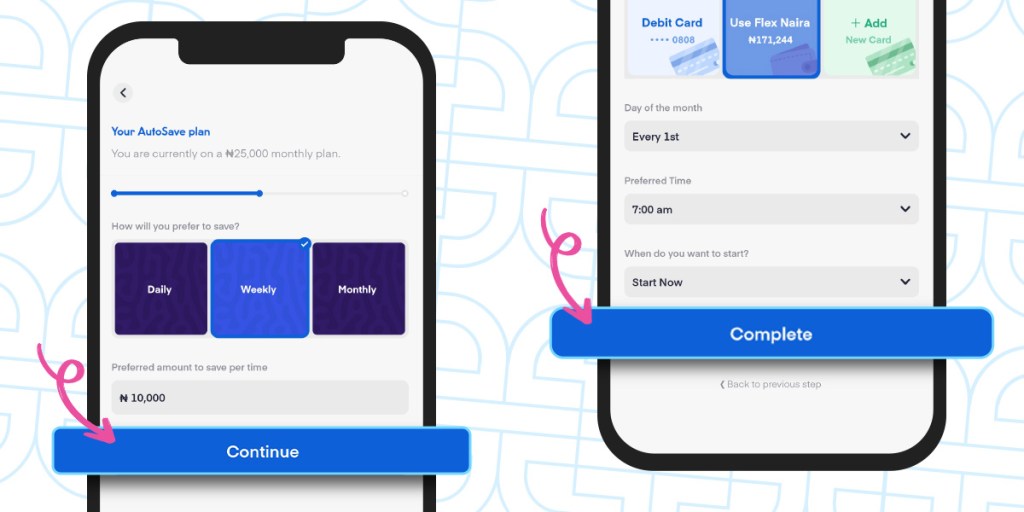
My dad noticed the alerts and asked me about it. He was sceptical about it because it wasn’t a traditional bank and could be risky. Some of his fears were valid, because I’ve lost some money to other agro and fintech platforms before, but PiggyVest has stood by me since day one. I left school with close to ₦100k; that was the first serious money I ever had in my life.
I’m such a fan. Even my dad still checks in to be sure the company is still legit, and I always tell him that PiggyVest keeps going strong. I’ve used nearly every feature on the app; I’ve saved in dollars, and I try to buy as many Investify investments as I can. The economy has made saving a bit harder, but I’m still doing my best. I even introduced my siblings and friends to the app and they’ve all had great experiences with the platform.

That’s incredible! Thank you for sticking with us.
I really like how you guys have not embarrassed me till today.
And we never will o. After school, did you continue receiving financial support from home?
I started my internship after school, and we were supposed to be paid a little over ₦130k monthly. It was a government hospital, and the agreement was that payment would be made after six months, so I needed some financial support from my dad, about ₦20,000 monthly.
That’s really kind.
Yes. After six months, they paid everything in arrears. It came close to ₦800k, I was so excited. I sent ₦200k to my PiggyVest. I put ₦200k in another agro investment that eventually failed during COVID-19. I used ₦100k to start my business, and the rest went to other personal expenses.
You’re definitely an accountant’s daughter.
[Laughs.] That definitely influenced my saving culture. From my savings, I was able to get my flight ticket to come to the Aké festival held in Lagos last year and enjoyed one of the best two weeks of my life. I came back from service last year and got my first proper job in September. I also planned to save ₦50,000 from my earnings every month, but that has been a bit hard to do because I also fund my business using my income.
Though I started my business in 2018, it really took off last year. Initially, I just focused on reinvesting my profit into buying more books and compounding my stock. But at the end of last year, I started saving ₦20,000 to my PiggyVest savings account each month as a mini salary for myself. This year has made that a bit difficult, but I still try to keep up.
What led you to study pharmacy in school?
Initially, my parents wanted me to study medicine. But the problem was their choice of school: Babcock University. Babcock is owned by my church, the Seventh Day Adventist church, and I had gone to a secondary school owned by Adventists. Going to Babcock meant I would be forced to see the same annoying faces from secondary school. There would also be a lot of people monitoring every step; I didn’t want that life. I was also scared of blood, so that helped my decision.
My mum also used to have a large pile of one magazine by This Day newspaper in her room that featured career women. One day, I read a feature of a pharmacist, I think she’s the CEO of MedPlus, and I was inspired. I realised that pharmacy was more flexible and had multiple options like hospital pharmacy or community pharmacy, which was my preference. Opening your own pharmacy also used to be a really lucrative venture, unlike now. So, my choice was well-thought-out at the time.

Has it been everything you hoped?
Not really. Nigeria is somehow and there isn’t that much respect for pharmacists. I don’t really care for that but I want to be paid a fair wage. Yet community pharmacies offer you peanuts to work long hours with almost no days off. It sometimes feels like all the time I spent in school and my internship was just a waste.
With other areas of pharmacy, there’s better work-life balance and pay. But it’s really tough landing that kind of job. Hospitals don’t employ many pharmacists at once; to them, it’s “just drugs”. Some hospitals would rather wait for corp members they can pay peanuts. NYSC year felt like a waste for this reason.
That sucks.
Yeah. I’m trying to see if I can move to Lagos this year to improve my career prospects. Staying back in Port Harcourt will not do much for my income. My options are to leave PH or leave Nigeria, but only one of those options is possible for now.
I’ve seen many tech-related pharmacist roles in Lagos, but location has been a barrier. I don’t see any career growth where I am now, and I hate the feeling of stagnancy. It’s just not who I am.
It’ll work out eventually.
I’m sure it will. Many people have the notion that pharmacists are ballers, but it doesn’t work like that.
What inspired your business, The Readers Hut?
I’ve always been a big reader; I started reading as a young child, and I’m pretty sure I read every book at home. Back then, I could read 100 to 120 books a year. I especially love fiction; Nigeria is too stressful for me to enjoy other genres. Anyway, in school, I had two friends who started businesses pretty early — one had a hair care brand, and the other was a social media manager slash tech sis.
Around 2018, the year before graduation, we came together and assessed our future as pharmacists. It wasn’t looking like the lucrative career path we had envisioned at the beginning, but my friends already had backup plans and it seemed like I was the only one with no contingency plan.
It felt like I didn’t have any purpose. I was just fixated on getting a corporate job after school. “It’s not a bad plan,” they told me, “but you love reading so much, why not just build a community out of it?” It made sense, so I went to Bookstagram to see what other book communities were doing. It looked like I could pull it off, so I started brainstorming names. My friend’s cousin had a brow and lash business called “The Brow Hut”, and I thought it was a cool name, so I replaced “brow” with “readers”, created the Instagram page, and “The Readers Hut” was born.

So it started as just a community of readers?
Yes. At first I was just sharing the books I read. I put out my first bookish post in February 2019. Initially, I posted book recommendations, searched for content, created mine, and shared the bookish activities happening around the year. Back then I had more engagement on my Instagram page because it was just a community for readers, but since I turned it into a business, that declined. Twitter is my preferred platform now.
When did that change?
Gradually. After two years on Instagram, I started to take my Twitter account more seriously. Around that time, I heard that Roving Heights had an Affiliate Marketing platform where you could register with them, share your links with people and earn 5% of the sales. I signed up and started making ₦5,000 to 10,000 weekly; I loved the money I was making then. I would let it accumulate and then withdraw when it got to ₦30,000.
The major reason I joined the platform was because people kept asking me where they could get books, so it was easy to refer them. Also, in 2020, after getting so many requests, I started a virtual book club on WhatsApp. We would nominate books based on genres; this year, we are reading across the world.
I only started monetising it last year. Everyone pays a ₦1,000 subscription fee, and I split the money into two: one part for me and the other part for book club activities and games where people could win movie tickets and airtime.
Sounds like a great time.
It really is. But there was still the issue of where to buy books. I live in Port Harcourt, and Roving Heights only has branches in Lagos and Abuja, so the cost of delivery was too high for those in the Southern and Eastern States.
In these regions, there are five other well-known bookstores: Buy Books in Port Harcourt, Bookville World in Port Harcourt, Hazel Books in Abia and a couple of others. Rivers State is closer to most Southern and a few Eastern states. In terms of stock and popularity, Buy Books is probably the biggest bookstore in Port Harcourt. But she is a really private person and people connect easier when there’s a face attached to a brand. So, on Twitter, I started referring people to her store.
When did “The Readers Hut” become a bookstore?
I officially started book sales in October 2021. While most people were okay with patronising these big bookstores, they still wanted good customer service. And this is hard to do as a business grows. Very few companies get it right; in fact, the stellar customer service is one of my favourite things about PiggyVest.

Starting my business and running it solo meant I could reply to inquiries or complaints on any platform in record time. I used the ₦100k I got from my internship and bought the first set of books — I had been in the book industry for a while, so I knew all the publishers to reach out to, all I did was send them emails.
Then, every month I would add about ₦20,000 to the money that I made and buy more stock. My store has a very limited stock, so my sales were usually within the ₦50,000 to ₦100k range. But last year, around July/August, I saw significant growth in my business. Sales went up to ₦150k, and towards the end of last year, I made ₦700k in sales. It’s a great feat for me because this is a one-woman business; I’m running it out of my bedroom in my parents’ home.

A great accomplishment indeed. What challenges have you faced as a pharmacist and an entrepreneur?
Books are getting so annoyingly expensive. And it sometimes takes all the money from my sales to restock. I have mostly African books in stock because it’s easier to get them here.
I was saving money to learn the process of importing foreign books with my friend last year. But the dollar rate kept increasing, and even with the large discounts foreign publishers give African distributors —just to get their books into this region— the exchange rates won’t let you buy a reasonable quantity. Add the constantly rising shipping rates, and when it’s time to resell the books, the prices seem so exorbitant because you have to recoup your investment. It’s absolutely maddening.
The buying power of Nigerians has also dwindled, so there’s that. Paperback books that used to go for ₦5,000 now go for ₦15,000. Even medications are so expensive that people are opting out of buying their life-sustaining drugs because they simply can’t afford them.
We sold a card of a drug at ₦1,900, and when we restocked it, the selling price was ₦6,000. A patient came to buy “Galvus Met”, a diabetes medication, but it had gone up from ₦7,000 to ₦9,000 in a month, so he went back home. People complain of pharmacies being too expensive, but pharmacies barely profit anymore as both their capital and profit go into buying back drugs. You have to buy fuel to keep the lights on. Sometimes I think to myself, “Should I just quit and stay at home?”. Medications like ventolin inhalers are hard to come by; some of these companies left Nigeria, and those who are willing to import the drugs at this current exchange rate have to make their money back somehow, hence the outrageous prices.
That’s so true.
Regardless, my book business is still doing fairly well; more people know about me, and they help me spread the word. Having people vouch for me is one of the best things that happened to my business. It eliminates the trust issues people have with online buying or social media businesses. I have met many awesome people on Twitter, and many awesome people have found me there too.
What’s your goal for the next five years, both as a pharmacist and entrepreneur?
For someone who loved to plan even as a child, my life has felt disorganised; life isn’t going the way I thought it would. I had a plan with my parents to set up a pharmacy and bookstore in Port Harcourt, near a student-dense area. But life happened; my brother needed major surgery that set us back financially, and I’m just happy he was able to pull through.
So, in the next five years, I want to leave this country because I don’t think I can continue this Nigeria thing. I want to be licensed abroad as a pharmacist, even though I don’t know how it’s going to happen yet because the process is very expensive. I’m still doing my research.
But I also need to be able to fund these dreams, and that means growing my income. So, my plan is to move to Lagos first. I know I can sustain my business wherever I am, even if it’s from Canada. I’m also looking to learn a skill, preferably in non-code tech areas like product management, but it’s difficult combining a 9-5 and book business. I already have experience in community management and so my next CV will reflect that. Hopefully, one day, I’ll become the baller that people think I am.
Speaking of balling. What would you say financial freedom means to you?
Hmm, that’s a very wonderful question. Financial freedom to me means being able to provide effortlessly for myself and my parents. To be able to provide extra resources for my family. As the first child, I want to have the means to look out for my siblings, send them money when they need it, or get them gifts for special occasions.
I want to be able to gift my friends too. To afford the books I love. To get myself nice things that make me look good like new shoes and dresses and skincare products. To have more savings and investments in my PiggyVest. Financial freedom means being able to afford fun days for myself and spoil myself like I used to. Financial freedom means not working all the time just to feed. Living with my parents has helped my finances a lot because I know living alone would have proved more difficult. And Port Harcourt is almost as pricey as Lagos. I just want balance and to afford a wonderful life.
How are you working towards financial freedom?
Honestly, the first thing is to relocate to Lagos and earn better. When that happens, I already have a plan for my business to keep running from Port Harcourt until I settle down. Moving my business to Lagos won’t be hard because most of my customers live there already. I’ve been applying for jobs in that area because I know a well-paying job will elevate my situation. Everything else will fall in place.
Sweet. Is there any piece of advice you’ve received in this time that motivates you?
My boyfriend and I have much in common — being the first child and working for minimal pay — so he understands my current plight. He always tells me, “Other people have lived through what you are now; that’s why I know you will come out better”. He always reminds me how intelligent and hardworking I am, so while I’m allowed to feel bad, I’m not allowed to wallow in it.
Could you share some career or financial advice for women looking to walk the same road as you?
For pharmacy, my only advice would be to be great at what you do. Pharmacy is very complex, if you don’t know your onions, people may take advantage of you. Try your best to gain experience and do it because you have a passion for it. As for financial advice, I’d say, make a budget for your money and follow through with it. A lot of women are great at creating budgets, but we never really follow through with it. So try to adhere to your budget.
Finally, when starting a business, go for one that is fast-moving and has an existing market for it. This is based on my business experience. Don’t go into a business that is too capital-intensive, because then you’ll have a funding problem. I’ve applied for many grants and haven’t really gotten any responses. So do your due diligence, and also buy stock that you can sell off.
Generally, my advice would be to ensure you do a business that doesn’t drain all your finances and to save in foreign currencies.
Solid advice. Thank you for talking to me, Chinaza.
It was my pleasure!