Women & Money is a monthly PiggyVest series that explores the relationship between real Nigerian women and money. This series sheds light on money, career and business from a female perspective.
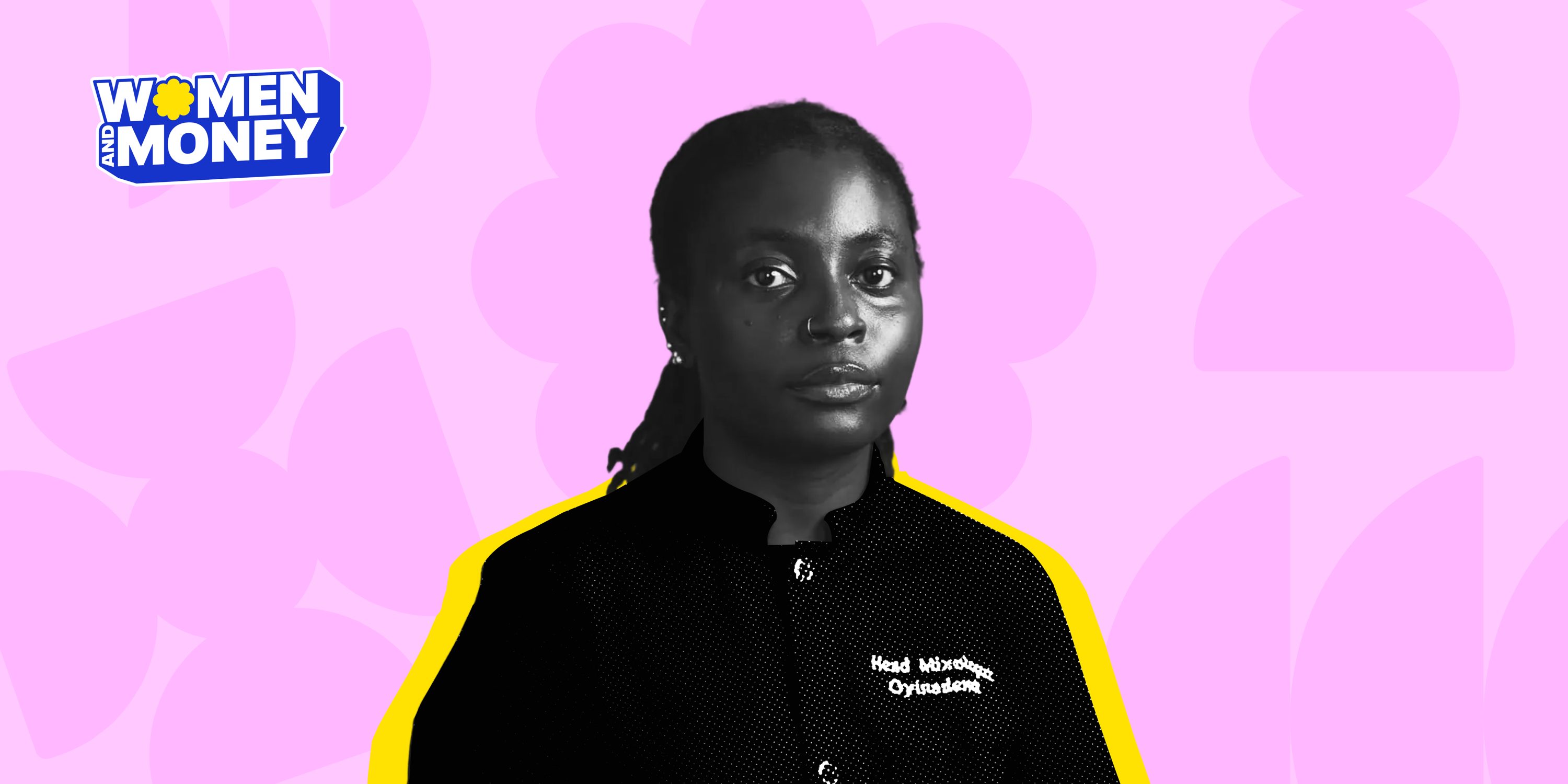
In this month’s edition of Women & Money, we speak to the inspiring Ore Eni-Ibukun, a Lagos-based Programme Manager at a global non-profit. In this conversation with Piggyvest, Ore shares her insights on navigating a dynamic career, managing finances, taking a career break and prioritising work-rest balance.
How did you perceive money and your family’s finances growing up?
I’d say we were average. More like lower middle class. Both my parents were civil servants with the state government. That meant steady income. Although it wasn’t a substantial amount of money compared to their counterparts in private employment, a steady income provided a sense of security. We didn’t have much disposable income, but we had our basic needs met.
My mum was a planner. She’d make a budget and stick to it religiously. She would always say, “I’m a salary earner. Anything not on the budget for this month has to wait till next month.” It used to stress me out because I would think, “It’s just ₦500,” but in retrospect, I understand how ₦500 can be hard to squeeze out if you don’t have a plan for it. As a result, I developed the idea of budgeting early on, thanks to my mom. On the other side, my dad was a little more spontaneous in his spending.
How has this perception evolved over the years?
I didn’t know about investing or creating an emergency fund. The extent of my knowledge was saving for specific purposes. Although I studied accounting, personal finance wasn’t covered in the syllabus. I learned about those things later on in my twenties, after I started working with a finance edtech company.
My mum also planted the idea that you should try to increase your earnings. I saw her try many times to make extra income from selling clothes to selling drinks. But it wasn’t very practical for her because she’s a nurse at the cusp of her career, which meant having to do multiple shifts.
I’m now taking steps to ensure it changes, but for the longest time, it has remained pretty much the same. The difference now is that I know what to do. I used to see money as a tool to cover my basic needs, and now it’s evolving into a tool for self-actualisation—freedom to live the life I want, sustainably.
Did these circumstances influence your drive and ambition?
When I was younger, pocket money was the same every day. In primary school, it was about ₦30, and in much of secondary school, it was ₦50. The point is that you already knew what your money could buy, so there was certainty for the most part.
There was also the expectation to keep that certainty going after school. You know, finish university and get a good job. I remember teaching at a JAMB centre when I was 17. And the only reason I worked there was that I wanted to afford my internet costs. I loved being online—I loved Google searches, I loved Twitter. I calculated my data spend for every month, and when I negotiated my pay, I asked for just enough to cover my data costs and possibly some extra change.
And did this mindset change after university?
My first big girl job was at one of the Big Four accounting firms. My parents lived quite far from where I worked, and my health wouldn’t allow me to make daily long commutes. Once again, I found myself thinking about what my pay could cover, and I managed to secure an affordable apartment in VI.
Essentially, I was living paycheck to paycheck for a couple of years. Initially, my savings focused on rent and essential needs. It wasn’t until my third or fourth year that I considered saving for other purposes. Feeling burned out and needing a break from work prompted me to consider creating an emergency fund. I then calculated my living expenses for the potential break and began saving accordingly.
With my new job, I’m actively working to shift my mindset. The problem with thinking “as long as my pay covers my necessities” is that your definition of necessities expands as your income grows. However, as your tastes evolve and responsibilities increase, more things become essential. You could earn a significant amount and still live paycheck to paycheck if your primary thought is that money is only for spending or covering expenses.
Let’s talk about your career for a bit. You’ve lived many lives. How did you land your first job after university?
I worked at Money Africa as a writer. I conducted financial research, managed social media, created content, and performed various operational tasks. I was their first employee, and apparently, I was a good one—the founder has made a few tweets about it. But at the time, I was always anxious that I wasn’t doing well.
I studied accounting as an undergraduate, but I really thought accounting was boring as hell. It was an unfortunate turn of events that I ended up there.
What was your first choice?
I wanted to study economics, which I’m still quite interested in. I took some economics courses as an undergraduate.
While entering an essay competition that required me to research new accounting trends, I discovered forensic accounting—accounting for crime fighting, fraud investigations, and forensic audits.
As I wrote that essay focusing on how accounting can help solve crimes, it made me think, “Finally, one interesting part of accounting.” Right then, I decided to do postgraduate studies focused on forensic accounting. My academic dream was to pursue an MSc, Phd, and a career in academia, with the ultimate goal of earning a Phd before turning thirty. Although I didn’t win the essay competition, it fueled my interest in forensics. I then wrote my undergraduate thesis on forensic accounting and financial crimes in the Nigerian banking sector, which earned me an A.
Still a win!
Over the next two years after graduating, I applied for master’s programs in forensic accounting and consistently received offers of admission. However, I never had sufficient funding to accept them. My parents couldn’t fund it, and I didn’t know enough about other funding options beyond a couple of scholarships. I think that would have changed how I approached it.
What was your next course of action?
All of this happened right after university, so I decided to just find a job, and that was when I applied to KPMG. I was very specific in my application; I applied directly to the forensic team because that was the only aspect of accounting I was interested in.
The application process took a year because there seemingly wasn’t enough space. In retrospect, I think it’s because I missed an application window.
While I waited, I did several things. That’s when I worked with Money Africa. I also volunteered to write and advise small businesses, mostly providing accounting advisory services with Triift Africa, founded by my friends. I also went to fashion school and trained at a bank. Finally, at KPMG, I worked in the forensic services department.
It’s no small feat getting into one of the Big Four. Did you, at any point, feel impostor syndrome?
I would say yes and no because I wasn’t employed as an experienced hire. I joined the organisation as a graduate trainee, so there weren’t many expectations. They expected that you were coming in with a blank slate—just come with at least a 2.1 in your BSc and do well in the interview.
Graduate trainees are typically evaluated on factors such as curiosity, responsiveness to feedback, and the rate at which they learn. So in that light, I didn’t feel much impostor syndrome.
But when you’re in a global firm with a lot of structure, there’s a lot of pressure. So my anxiety was not, “I don’t deserve to be here.” It was more, “I don’t know if I can hack this. I don’t know if I have the capacity to succeed here.” It was a more forward-looking worry than a present one.
Was this one of the reasons for your career break?
Yes. It was a combination of many things. One, I was genuinely tired of working. I deal with some chronic health issues that aren’t essentially curable—you just live with them. But two of them come with fatigue, so I get tired quite quickly.
Anyone who works in the Big Four knows it’s a high-pressure environment, and there’s a lot of demand on your energy. I’ve experienced doing multiple things at once outside that environment, and all of it still doesn’t add up to the pressure in that environment.
I was really tired and dealing with burnout at that point. I knew I wasn’t giving my best anymore, even though my evaluations came back great. My managers were willing to let me take time off and come back. But the second problem was: “I don’t know if I want to continue doing this.” I felt my strengths were more suited to other things. I didn’t know what those other things were, but I needed to find out, hence the break. I wanted a break without the obligation to return.
5 Nigerians On How They Are Responding To Nigeria’s Tax Reforms

That’s understandable.
I could see the end goal of remaining in the firm—partnership—and I didn’t know whether I wanted that. I did a cost-benefit analysis: What will it take to attain partnership, and what are the benefits? But most importantly, “Is this what I really want for my life, considering my strengths and weaknesses?”
I decided it wasn’t.
So, I took a break to rest and recover mentally and physically from years of working. I’d worked for some years before then, and I spent almost five years at KPMG.
Leaving the Big Four is a brave move, but forfeiting paid employment is an even bigger risk. How did you plan financially for this sabbatical?
I took the break in March, and KPMG pays bonuses at the end of February—I timed it to ensure I got my bonus before I left.
I had also spent time tracking my expenses. I created an expense tracker and tracked my spending for several months to get an average monthly spend on different categories. That was supposed to give me an idea of how much I needed to survive monthly while on break.
Then I did a forecast of all my earnings. I calculated what I expected salary-wise and bonus-wise for the next six months, to see what that difference would be and how much I needed to save to live comfortably for the three months of my sabbatical.
By the way, my sabbatical was initially supposed to be three months but ended up being six months for other reasons. Anyway, I did the math and included travel, a mini West Africa trip. Now that I was free, I wanted to see the world, or some of it. Then, I started saving for the sabbatical beforehand and also paid my rent a year ahead so that whatever happened, I wouldn’t end up under a bridge.
[Laughs]. That’s incredibly smart.
When it was close to my sabbatical time, around February 2024, I started to pay off bills in bulk. I knew what my service charges at home were, including housekeeping costs, electricity bills, internet costs, and the cost of buying non-perishables, etc. I paid enough bills to cover at least six months. I wanted to keep my anxiety at bay by paying off a lot of things in advance.
All that remained was money for day-to-day expenses: fresh groceries, transportation, and travel. Unfortunately, a lot changed between when I made the budget and when my sabbatical started. That was a period during which prices started to increase at an alarming rate, practically quadrupling.
I had to cancel the trip. I’m glad I did, because that extra cash was my buffer during that time. It just made sense to stay at home where there was always “rice”. Obviously, I still had to do things—hang out with friends, go see my parents, even travel within Nigeria to places like Ibadan. But I could more easily afford these.
You clearly had your finances all mapped out. Did you have any plans for reentering the workforce or any prospects lined up?
Nope.
I remember my colleagues asking, “What’s next?” and I told them I had no plans and was just going to rest. They were shocked. Like, “Girl, in this economy?”
I know it was a leap of faith. But I was certain I didn’t want to be in that situation anymore. And job hunting is a job on its own—I couldn’t do that while still working. So, my break was for rest first, and then self-reflection. “Who am I and what do I want from life?” And I hoped that the answers to those questions would help shape the kind of work I’d want to do.
And what was the outcome?
I reflected on my evaluations at KPMG: What strengths had they identified? What made me feel fulfilled?
I realised I’m good at ideation, so I began looking into strategy and operations roles. But I also needed to believe in the organisation’s mission—whether it was the product, service, or just the work they were doing. That mattered a lot.
Women & Money: Adesope “Oyinademii” Ademola Is Hustling Her Way To A Cocktail Empire
Eventually, the anxiety kicked in. Money was running low, and I thought, “I can’t keep doing this.” I did some consulting work in between—operations for one startup, compliance for another. Some didn’t pay, and some paid very little. But I needed to keep my mind active. I was also going to the gym, trying not to shut down completely.
I started looking for fraud-related roles again, like what I did at KPMG. However, one non-negotiable thing for me was that I needed a remote job. That’s how I transitioned to a more strategic generalist role.
What does career progression look like for you in this current role?
Honestly? I don’t know. Many people are uncomfortable with uncertainty, but I’ve learned to be okay with it, at least in some areas of my life. Some people also think I’m a control freak, and I am, but only about the things I can control.
For bigger existential stuff, however, I’m okay with not knowing.
I might return to the anti-financial crime space, or I might decide I don’t want to do operations at all. I don’t know yet. For now, I’m just doing good work and staying open to where life takes me.
Fair enough. You’ve made great strides professionally, and still have some impactful passion projects—like Northstar Library—in your bag. How did this idea form?
Northstar Library is actually the most recent of my “side quests.” I wasn’t the child who played outside a lot. I was indoors, reading anything I could find. That included books on my dad’s shelf, like Systematic Theology. I even read people’s old diaries and church notes; yes, I was that kid.
Books have always been how I make sense of the world. Every major moment in my life is associated with a book. When I feel alone or confused, books help me feel understood. And I think much of our personal and cultural identities are tied to knowledge, and books carry so much of that.
Unfortunately, libraries are no longer easily accessible in Nigeria, and where they exist, they aren’t well equipped. So, my long-term dream is to bring libraries back to every local government area, in partnership with public and private stakeholders. That’s a big goal, but I believe in it. We were supposed to start with one in Yaba. We even have over a thousand donated books, but partnerships have been falling through. So we’re re-strategising. Hopefully, by the end of the year, we’ll have something.
In the meantime, we’re doing pop-up reading events—people come, drop their phones for a few hours, and just read and connect with other readers. It’s been beautiful.
That’s pretty amazing! We’re rooting for you.
Thanks!
You have another “side quest”: The Table Community. What was the inspiration for this community?
When I share about my spiritual journey, people often say they relate, especially when it comes to questioning faith. But there aren’t many safe spaces to do that in religious communities. You can ask questions, but only the “acceptable” ones. You can’t question fundamentals.
I started The Table Community with Kamsy. We both grew up in deeply religious homes, but we also think deeply about life and meaning. I introspect a lot (maybe too much), and I often share my thoughts publicly—not to teach anyone, just to say, “Here’s what I’m thinking.”
Women & Money: Jesimiel Damina Wants To See More Women Filmmakers In Technical Roles

Kamsy and I met through mutual friends and instantly clicked. I didn’t have the bandwidth to build a community at the time, but Kamsy did. So, she ran programming, and I supported her in operations. We started with fifteen people, mostly friends, and it has grown from there. We now have over five hundred members on WhatsApp and a presence on Instagram.
The Table Community turns four in June. As for the future? Again, I don’t know. We may need to redefine what The Table is, but for now, it’s a space for people to just be.
You also ran a business, Flippe. What was your experience of doing business in Nigeria?
It was tough. I loved the parts where we’d get new shipments of books—like, “Yay, books!” I enjoyed hand-writing notes for customers and handling orders. But overall, it was a lot. We used my tiny apartment as storage. I managed shipping and logistics, and Bolu—my partner—would handle customer complaints and interactions.
It was also expensive. We depended heavily on foreign exchange—buying books in dollars, but getting paid in naira. Between the time customers ordered and when the books arrived, the exchange rate would’ve changed drastically. Sometimes we had to pay out of pocket to cover the losses. We were losing money and burning out.
Eventually, we took a break. But that was three years ago.
Do you think Flippe will ever make a comeback?
I don’t know. I still hold space for it. Maybe one day we’ll bring it back—a cute cafe bookstore or a digital shop. Who knows?
I guess we’ll see. Let’s talk personal finance. What does financial freedom mean to you?
Financial freedom, for me, is about being able to afford the life that I want.
I want a simple life, and I used to think that meant inexpensive. But I’ve realised that the life I want costs money, not just here in Nigeria, but globally. The cost of living has gone up everywhere.
So now, financial freedom looks like being able to afford that life sustainably—that’s the key word. It’s not just about affording it today, but knowing that the version of me in 2030 is also somewhat sorted. Maybe not fully, but at least well on her way. That might mean a stable job or hitting certain savings and investment goals. Whatever it is, it has to be sustainable.
Do you see yourself working even when you feel “financially free”?
Absolutely. I cry about work all the time, but I enjoy what I do. I’m a bit of a hypocrite in that way. I just want balance—rest and work. I don’t think I’ll ever be someone who doesn’t work. The scale or type of work might change, though. Maybe it’ll mean doing things at my own pace.
Ideally, I want to work three days a week; two days for deep work, and one for meetings. That’s the dream. I’d love to teach at the tertiary or postgraduate level one day, maybe even study psychology or go to med school and become a psychiatrist. But whatever it is, I know I’ll always work in some form.
Would you say you’re close to your definition of financial freedom?
In this bloody economy? I’m not close at all. One thing I’m inching toward is being able to afford a sabbatical now and then. Like, work for a bit, take three to six months off. I’m not quite there yet, and I just had a six-month sabbatical last year, so I’m in recovery. But I think I’ll take another one in the next two or three years.
I’m trying to build a life that involves work-rest cycles and incorporates rest into my day-to-day work life.
Beyond health struggles, have you faced any work-related challenges?
Right now, I feel like I’m not earning enough. I firmly believe that financial freedom is closely tied to one’s earnings. People talk a lot about saving and investing, but let’s be real—if you’re not earning enough, how do you save?
Thankfully, I’m no longer living paycheck to paycheck, and I can mostly afford my current lifestyle. But I know I’m not earning enough.
When I took this new role, I had to accept a compensation cut, since it was a new career path. That was tough. But there are perks—remote work, flexible hours, more autonomy. But am I where I want to be? No.
For example, I could be working remotely from Europe, but I’m in Lagos, sweating with everyone else. When I compare it to what people earn here, I’m doing okay. But in terms of my own goals? Not quite.
And how would you rate your money habits on a scale of 1 to 10?
Now? A solid 4. Maybe 5. And that’s mostly because I’m not living paycheck to paycheck. I’m rating myself this way because I have the knowledge, but haven’t always followed through.
I used to lean more toward my dad’s style of spending—compassionate spending. He’d give you his right eye if you needed it. I inherited that, and I’d often just say, “Oh, I have the money, let me give it.”
Now, I’m trying to be more like my mom: structured and intentional. I’m budgeting, tracking expenses, and rebuilding my finances after a six-month break. I’m setting up savings, an emergency fund, and starting to think about investments again. I recently mapped out where I want to be financially in five years—how much I need to earn, save, and invest.
That’s a fair assessment. Have you made any money mistakes?
Not really. I’m naturally risk-averse, and my work involves a lot of risk analysis and management. So I overthink everything.
Honestly, the only scams I might fall for are those that exploit compassion. Most of my financial mistakes have been related to overspending. I’ve invested in passion projects that aren’t profit-oriented, but I wouldn’t call those mistakes. They’ve given me a sense of fulfilment, even if there’s no monetary return.
What’s one expense you’re proud of?
Moving to a bigger apartment really improved my well-being, even though I was careful not to spend more than two months’ salary on rent. Also, work gadgets and inverter batteries—we changed them in February, and now solar stuff is super expensive, so I’m glad we did it then.
I also changed my phone in January. My last phone lasted four years, so that was a good call. With the new tariffs, I’m relieved I don’t have to deal with that for a while.
Love that. What career advice would you leave for young women figuring out their path?
I hesitate to give advice because I don’t know everyone’s context. But one thing I can say, especially for women at the early stages of their careers, is to prioritise transferable skills. When you’re starting out, it’s tempting to chase the shiny things—quick money, quick visibility. But always ask yourself, “What’s next?” “What’s the path forward?”
In 2019, I received a couple of job offers. One offered a lot more pay, almost double what I’d earn at KPMG. However, I chose the latter for several reasons: the focus on learning, alignment with my career goals, transferable skills, and brand goodwill. It’s a decision that’s paid off in the long run.
So, if young women have choices to make, I’d say: prioritise what makes sense for the future, not just for now. Focus on opportunities that give you long-term value. Prioritise the skills and experience you can carry into future roles, industries, or countries. It might feel like a sacrifice now, but trust me, it pays off in the long run.