Women & Money is a monthly PiggyVest series that explores the relationship between real Nigerian women and money. This series sheds light on money, career and business from a female perspective.
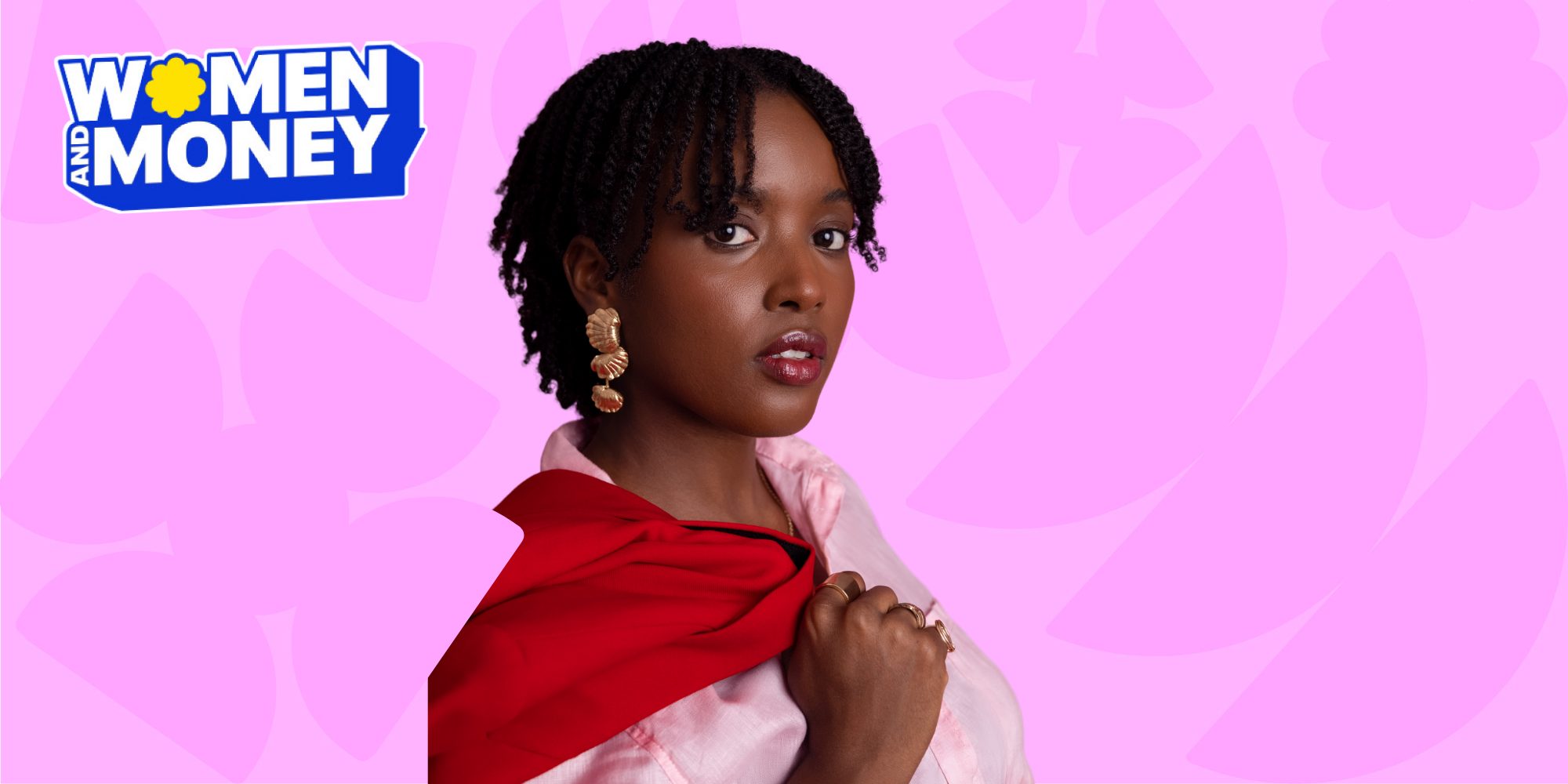
For this month’s episode of Women & Money, we spoke to Oluchukwu Chiadika, a Lagos-based marketing professional and personal finance educator. In this Piggyvest interview, she discusses how a failed investment led to starting Your Personal Finance Girl, and shares some personal strategies for attaining financial freedom.
How would you describe your family’s financial situation growing up?
We’re a family of six: my parents and four children. We were not comfortable. Sure, we didn’t lack food, but there were no extras or luxuries like eating out. We probably dined out once or twice, but for the most part, the vibe was “there’s food at home.”
How did this influence your perception of money as a child?
I just knew there was no money. But I also remember my dad used to have cash in the house, so I knew the purpose of this paper early enough: it was meant to be spent—to pay for value. My mum also owned a business centre, and I often had to go with her. There, I was exposed to the concept of making money; if you get things done for people, you get money in return.
My parents introduced me to the concept of business, and it helped me growing up because I quickly understood the need to give value to get rewarded. Explains why I started my first business very young, in primary four.
Really? What business was that?
I sold lollipops at school. My allowance was ₦20, and it would only buy me two lollipops in school. But I wanted more. I noticed that a shop in the street after ours sold for ₦5 per lollipop, so I saved money, bought lots of lollipops and started selling them at school. So I had my allowance and extra to spend.
But that evolved with time. I’ve never really been a fan of product-focused businesses, as in physical products. I prefer to sell a service. And for me, that was copying notes for people. I could write notes for up to a hundred people, and I charged per page. Apart from making money, an extra benefit for me was that I was unconsciously learning.
In secondary school, I was busy helping with my mum’s business, so I couldn’t keep up with mine. However, I always found ways to make money.
Did you maintain this entrepreneurial drive when you entered university?
Of course. I did an OND first, and for those two years, I was always liquid because I found a gap and filled it. My business at the time was linked to my mum’s business; I helped people print and photocopy notes, sold textbooks, did assignments, and tutored my classmates.
Love it! Did your discipline in any way inform your career choices today?
There isn’t a direct correlation between my studies and my current work. Although I studied food science and technology in my OND and BSc, I work in marketing and run a digital-led financial education company.
I graduated as the best student in my faculty — in the polytechnic, it’s called school — and the best in my department. Yet I sat at home for three years because I couldn’t get direct entry into school. I spent one of those years walking around Lagos, applying to every FMCG I could find, but I got crickets. That made me realise that the job market wasn’t as easy to navigate as I thought, and one might need more than good grades to get into rooms that you deserve to be in.
How did you survive these years?
You already know I must find gaps to fill. I did many jobs during this time; I was a personal shopper, a teacher, I did ushering jobs, and I was a PA to two high-profile people. I was always busy. I also managed my family business for those two and half years — we offered meal delivery services in Lagos.
A true hustler!
This era of my life really taught me not to sit around waiting for things to happen for me. So when I got into the university, I hustled a lot. I had three jobs as an undergrad, and I did about four or five internships during that time, too. I also knew getting a certificate would not be enough, and I had to find ways to build skills or upskill. Even if I got a job after graduation, entry-level roles did not pay much, so I needed more.
I had to focus on transferable skills. During the lockdown, I took a course in public speaking, and then I became interested in marketing. I realised I had been doing this since 2015, just not in the tech industry.
Women & Money: Jesimiel Damina Wants To See More Women Filmmakers In Technical Roles
Tell us about your marketing journey.
It’s been a beautiful journey. In 2015, I was doing social media management and video editing, and in my opinion, marketing felt a bit more serious.
My career in tech marketing officially took off in 2021. However, my interest in marketing started with a six-week growth marketing course I took in 2020. It was quite hands-on and technical, and I love the technical side of things because hard things are easy for me.
It’s been a learning curve with the dashboards, automation, and A and B testing. There’s always something to learn. There’s always something to tweak, a better result to achieve, or a better open rate. And you’re always going to be fighting for virality. I’m quite detail-oriented when it comes to carrying out campaigns and drafting reports, so it’s been thrilling.
Let’s talk about YPFG. Why personal finance?
It was either personal finance or business finance. As I made my decision, I realised that there were many business consultants, but not more than five people were talking about their personal money. Even the personal finance resources on Google are tailored to Europeans and North Americans, focusing on topics like credit and IRA. They’re not localised for Africa or Nigeria, where we’re more familiar with pension schemes. To me, personal finance was a better and more valuable gap to fill.
How did you start?
It was during COVID that My Personal Finance Girl hit a crescendo. I really just wanted to help people. It was a passion project, and I was anonymous for the first year, not showing my face for a while. I talked about saving, investing, and what to do when you receive your income.
Did you develop your teachings from your own past experiences, or were you learning and sharing at the same time?
It was a blend of both. In 2015, I made my first investment mistake. I put all of my life savings into an investment and lost everything. This was a very costly mistake that forced me to start from scratch again.
It took almost 6 years of learning to start YPFG. I started with the basics: educating people on why it was important to budget, the meaning of savings, how to save, and the different types of savings everybody should have. It was when I started getting traction that I started sharing my story; it humanises my brand and lets people know I’ve also made mistakes.
How to Fully Recover from a Financial Setback in Nigeria

What major obstacles have you faced on this journey?
It would be consistency; consistency is very hard. Last year was one of the most difficult years for me on a personal level, and I stayed consistent. I just kept showing up.
What about accomplishments? What are some of your favourites?
What stands out for me every single time is when people give me a good review, or feedback about how they started saving, investing or clearing their debt. One time an influencer messaged me saying she saved her first million because of me. Another time at a speaking engagement, a guy I’d never met before walked up to me and thanked me for a post I had made. It encouraged him to save, and in six months, he had saved up 1 million.
Some extra perks have been my appearance on national TV, award nominations and recognition by big brands. But it’s the personal stories and feedback that live rent-free in my head.
As a young woman in finance, what’s your audience like?
It’s a combination, but most of my audience is between 25 and 37. The majority are female; I think men make up only 39%. But, funny enough, more of my paying clients are men.
Speaking of paying clients, how long did it take you to monetise your platform?
YPFG started as a passion project, and I initially didn’t think about making money. I just wanted to contribute my own quota, so moving from that to asking people to pay for all that value was hard. I think I started monetising in 2023, and that’s because I had a 9 to 5 and other side hustles.
Has your gender ever been a barrier to attracting potential clients?
Yes. My gender and my age. A guy sought my help to start investing. I gave him my rates, and he went on to say, “Ah, it feels weird to be learning from a lady.” Me, that I was on my own. I didn’t even argue with him; I just shut down the conversation. He still came back anyway, and now he’s growing his portfolio.
This past December, another woman in her early thirties said I was too young to teach about money. In my head, we are practically agemates, so why stereotype me? I’ve been doing this for a while, so why does my age matter?
Level Up Your Money Game At The Zikoko x Piggyvest Naira Life Conference This August!
Typically, I don’t pay attention to comments like that, but these ones were really direct. Honestly, I think people just need to chill.
Facts. So, where do you see YPFG in, say, the next five years?
In five years, I’ve taken over the world.
Let’s gooo!
We’re a digital-first financial education company, and we’re going to go global. Even though I say we’re catering to Nigerians of Africans, there are Nigerians all across the world. I have a few clients from Europe and six different African countries, minus Nigeria.
In the next five years, we’re going to be one of the top two when you’re talking about financial literacy.
Rooting for you! On a personal note, what does financial freedom mean to you?
For me, financial freedom is being able to give myself options. It’s being able to do whatever you want without overthinking it. It’s knowing you don’t have to work anymore if you don’t want to, being able to leave behind generational wealth.
And how close would you say you are?
Very close. If I continue at this rate, I can actually decide not to work again in five years.
Goals. Can you share a little bit of your strategy?
For me, it’s increasing my passive income. I’m aggressively working towards setting up a system that gives me a minimum of my current revenue regularly, like investments that give me chunks of dividends here and there. So, plan one is to tilt from active to passive income.
Another thing is increasing my asset vault, which ranges from tangible to intangible things. Landed properties, stocks, bonds and all of those other boring things that we like to mention. Finally, knowing the math of how much I need to invest and what assets to invest in to get a certain amount in dividends annually.
Aside from losing your money in 2015, have you made other money mistakes?
One mistake I’m not exactly proud of was when I hired a consultant for seven figures, and I did not get a dime in return. Zero value. Since then, I have become my own consultant.
As a financially smart girly, what’s been your favourite purchase so far?
My top purchase would be my laptop. That and data—bulk data.
Do you have any advice for your younger self and women in general?
Open your mouth and talk. Even to this day, there are things I’ve missed that I would’ve gotten if I just opened my mouth. Another thing I’ll tell my younger self is that there’s no room that you cannot enter; every other person inside that room is just like you.
For women, don’t let anybody tell you you can’t do a thing. It’s easy for us to be agreeable, but if you have a conviction that something is for you or will make you happy, put in your all, and in just a little time, you’re going to see the results.
What about financial recommendations or tips for aspiring marketing professionals?
A financial recommendation would be for everyone to know the basics of earning, spending, saving and investing. You need to be able to tell your money where to go. And when you make financial decisions, own them.
For marketers, it is a very rugged game. Before you become a generalist in marketing, ensure that you have one skill that you’re known for because that’s going to be a major selling point for you.