If you’re a Nigerian looking to diversify your portfolio, reduce overall risk, and explore safer, long-term financial vehicles, then bonds might be the answer you’re searching for. They’re a fundamental tool for building a resilient investment strategy and they offer a predictable income stream while preserving your capital.
You can buy bonds in Nigeria on investment apps like Piggyvest, via stockbroking firms, or through banks. You can also directly access bonds by investing through the Debt Management Office (like FGN Savings Bonds) or use asset management companies if you want to buy bond funds.
In this comprehensive guide, we’ll walk you through exactly what bonds are, how they work in Nigeria, and the different types available. Then, we’ll show you how to buy them (including a look at how Piggyvest simplifies the process) and explore the potential benefits and risks involved. Let’s begin!
How do bonds work in Nigeria?

At its core, a bond is a debt instrument, which essentially means it’s a somewhat fancy loan. When you buy a bond, you’re lending money to an entity (the bond issuer), which could be the government or a corporation. In return for your loan, the issuer promises to pay you periodic interest payments (known as coupon payments) over a specified period at a specified rate (the coupon rate).
At the end of this period (known as the maturity date), the issuer repays the original amount you invested, which is called the principal or face value of the bond.
As an investor, you can make money from bonds through regular coupon payments (as we explained above) or by potentially selling the bond to other investors before it matures.
Let’s illustrate.
Say you’re investing in a bond issued by the Federal Government of Nigeria (FGN) to raise capital for a road project. In this scenario, the government is the issuer. As an investor, you can purchase this bond (and become a creditor to the country) by buying, say, ₦1,000,000 worth of the instrument. This is your principal.
If this bond has a 10% annual coupon rate and a 5-year maturity, you’d receive ₦100,000 in interest each year (often paid in instalments, like ₦50,000 every six months). After 5 years, you get your ₦1,000,000 principal back. That’s the first way to make money from a bond — by earning regular interest and reclaiming your initial investment at maturity.
Alternatively, imagine that after two years, market interest rates for the same bond drop to 7%.
Your bond, paying a now higher-than-market rate of 10%, becomes more valuable. You could sell it to another investor in the secondary market (more on this later) for, perhaps, ₦1,030,000 — making a ₦30,000 capital gain on top of the interest you’ve already received. This selling before maturity is the second way to potentially profit.

Where can you buy bonds?

Buying bonds has become increasingly accessible in Nigeria, moving beyond traditional, sometimes complex methods, to user-friendly platforms like Piggyvest. Today, you can invest in bonds issued by the federal government, state governments, and even reputable corporations — often with just a few clicks.
However, there are two main places you can buy bonds:
The CBN Just Cut Interest Rates To 26.5%: What Exactly Does This Mean For You?

- Primary market: This is where new bonds are issued for the first time. The Federal Government, through the Debt Management Office (DMO), issues FGN Bonds via auctions. Corporations also issue new bonds through investment banks or directly.
- Secondary market: This is where previously issued bonds are traded between investors. In Nigeria, bonds are traded on exchanges like the Nigerian Exchange Limited (NGX) and the FMDQ Securities Exchange. You’d typically buy or sell bonds here through a licensed stockbroker or a platform that provides access to these markets.
There’s more to know. Keep reading!
What are the types of bonds available in Nigeria?

As we’ve already hinted, bonds aren’t one-size-fits-all. They come in various forms and have different terms, depending on who’s issuing them.
The following are the categories of bonds you can buy in Nigeria:
- Sovereign or FGN (Federal Government of Nigeria) bonds
- Sub-national (or municipal) bonds
- Corporate bonds
- Government agency bonds
- Bond funds
Let’s see how they work!
1. Sovereign or FGN (Federal Government of Nigeria) bonds
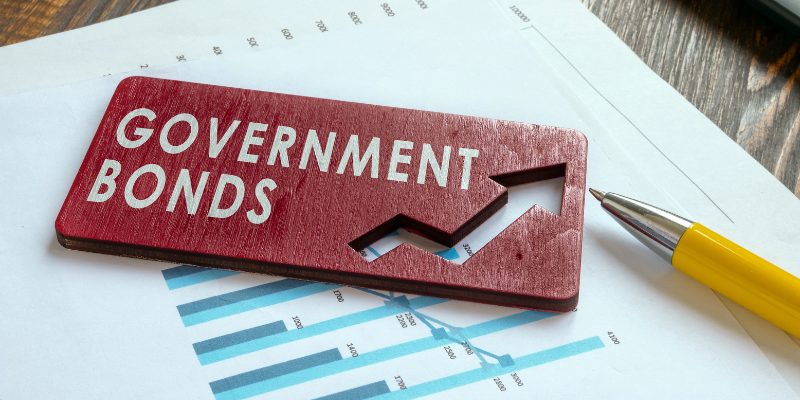
Sovereign bonds are debt securities issued by the Federal Government of Nigeria. They are considered the safest type of bond in the Nigerian domestic debt market because they are backed by the “full faith and credit” of the Federal Government and used to finance government deficits and projects.
There are two main types of sovereign bonds available to Nigerians today:
- FGN savings bonds: These are specifically designed for retail investors, with lower minimum investment amounts (say, ₦5,000) and a maximum limit (up to ₦50,000,000). They are issued monthly by the DMO and mature in 2 to 3 years.
- Regular FGN Bonds: These are typically issued in larger denominations (often starting from ₦50,001,000 in the primary market, though smaller amounts can be accessed via the secondary market or funds) and have longer tenors (ranging from 3 to 50 years).
The interest rate attached to sovereign bonds varies by auction and tenor. However, recent FGN Savings Bond offers in early 2025 were between 16% and 18% per annum. Other FGN bonds have different yields based on market conditions.
As we mentioned, you can get FGN Savings Bonds through stockbroking firms accredited by the DMO during monthly offer periods. Regular FGN Bonds are available in the primary market auctions via Primary Dealer Market Makers (PDMMs) and on the secondary market (like NGX and FMDQ) through a stockbroker or investment platform.
2. Sub-national (or municipal) bonds
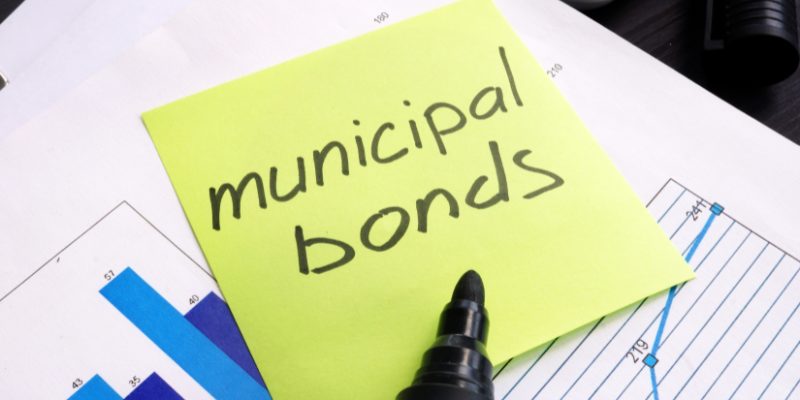
These are issued by State Governments or Local Government Councils to finance public projects, like roads, schools, or water systems. The interest attached to municipal bonds varies depending on the issuing state’s financial health and the project’s viability but they’re typically as safe as sovereign bonds.
They’re also often backed by an Irrevocable Standing Payment Order (also known as an ISPO, a fancy term for a written guarantee) from the Federal Account Allocation Committee (FAAC) to enhance their security.
How To Invest In Real Estate In Nigeria (Even If You’re Not Rich Yet): 5 Ways For Beginners To Get Involved
You can get a sub-national bond through investment banks during their public offer or on the secondary market, if listed.
3. Corporate bonds

Corporate bonds (or corporate debt notes) are debt securities issued by companies to raise capital for expansion, operations, or specific projects. They usually have higher interest rates than government bonds to compensate for the higher perceived credit risk (risk of default by the company).
Additionally, the rate you get from a corporate bond depends on the company’s financial stability, industry, and market conditions.
You can invest in corporate bonds through public offers when companies issue new bonds, or on the secondary market. For example, Piggyvest’s Investify allows you to access vetted corporate bonds and debt notes with as low as ₦5,000 while earning up to 35% yearly.
4. Government agency bonds

Government agency bonds are issued by federal or state government agencies (such as those responsible for housing and infrastructure development, like the Nigerian Mortgage Refinance Company, NMRC). These bonds are often for specific development projects with interest rates that depend on the agency’s backing (in other words, whether the agency falls under the federal or state government).
You can invest in these kinds of bonds through public offers or on the secondary market.
What Is Diversification In Investing? Tips For Building A Lasting Portfolio In Nigeria

5. Bond funds

Bond funds or fixed income mutual funds aren’t bonds themselves but mutual funds that invest primarily in a diversified portfolio of bonds (government, corporate, or a mix). This allows investors to pool their funds and have them professionally managed.
The return you get from a bond fund isn’t fixed like a single bond’s coupon but depends on the performance of the underlying bonds in the fund. You can get bond funds through asset management companies, investment platforms, or banks that offer mutual funds.
How to invest in bonds in Nigeria using Piggyvest
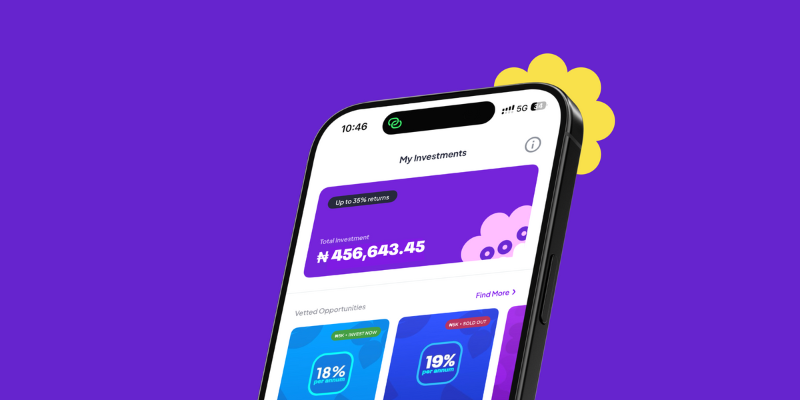
Piggyvest is the best way to save and invest in Nigeria, and our Investify feature simplifies investing in various asset classes, including bonds. In other words, you can safely and easily invest in several types of bonds using your Piggyvest app and with as low as ₦5,000.
Here’s how to invest in bonds in Nigeria via Investify:
- Download the Piggyvest app or visit our website.
- Go to “Invest” and choose an investment opportunity.
- Look for available fixed-income or corporate debt note investments.
- Click on “Invest Now.”
- Type in the number of units you want to buy and click on “Next Step.”
- Confirm your Investment.
- Click on “Invest Now.”
We always provide detailed information about pre-vetted opportunities on Investify, including details about the issuer, the interest rate (or expected returns), the investment term, and the minimum investment amount.
However, we recommend that you do your due diligence. Read the investment details carefully so you understand where your money is going.
Tips for avoiding fraud in bond investments

Investing is one of the best ways to build wealth, but it can be scary and feel intimidating, especially if you’re a beginner. Don’t worry. We’ve got a few strategies that can help you keep your money safe while you pursue financial freedom.
Here are some tips for avoiding fraud when investing in bonds:
- Deal with licensed institutions. Only invest through stockbroking firms licensed by the Securities and Exchange Commission (SEC) Nigeria and accredited by the DMO (for FGN Savings Bonds), or reputable and regulated investment platforms like Piggyvest.
- Always verify offers. Be wary of unsolicited offers promising unusually high, guaranteed returns. Cross-check FGN Bond offers on the official DMO website and read documentation if available.
- Don’t invest in what you don’t understand. Ask questions and read all documentation.
- Beware of offers that are “too good to be true”. If an interest rate seems astronomically higher than prevailing market rates for similar bonds, it’s a red flag.
Happy investing!
Summary
Whether you choose traditional routes or embrace the simplicity of Investify, investing in bonds empowers you to build a more resilient financial future. Start exploring today and make informed choices for steady wealth growth!
The articles on the PiggyVest Blog are developed by seasoned writers who use original sources like authoritative websites, news articles and academic journals to perform in-depth research. An experienced editor fact-checks every piece before it is published to ensure you are always reading accurate, up-to-date and balanced content.