In 2025, the National Bureau of Statistics (NBS) plans to rebase Nigeria’s GDP (Gross Domestic Product) and CPI (Consumer Price Index). While this may sound technical, the primary goal is to provide a clearer and more accurate picture of the economy — revealing the true cost of everyday essentials (like your pot of soup) and the actual strength of Nigeria’s economy.
Nigeria’s planned GDP rebasing to 2019 and CPI to 2024 will revise how it measures its economic activities and price changes. This, in turn, could impact interest rates on your savings, the prices you pay for goods and services, and the overall view of the country’s economy.
In this article, we’ll explore what GDP and CPI rebasing means, the importance of rebasing, and how these changes could affect you and your finances. Let’s jump right in!
What does CPI mean?
The Consumer Price Index (or CPI) measures the average change over time in the prices you pay for a basket of goods and services. This “basket” — it’s not an actual basket, just a list of key items curated by the National Bureau of Statistics, Nigeria — typically includes essentials like food and transportation as well as housing and clothing.
By tracking the total cost of this basket over time, the CPI reflects how prices are increasing or decreasing — indicating the rate of inflation. But beyond that, it also tells a deeper story about the purchasing power of Nigerians and the cost of living in the country.
For example, let’s say the cost of the basket rises from ₦10,000 to ₦10,500 in a year. This 5% increase represents the inflation rate for that period.

What is the meaning of GDP?
Gross Domestic Product (also known as GDP) represents the total monetary value of all goods and services produced within a country’s borders over a specific time period. It serves as a comprehensive scorecard of a country’s economic health — indicating the size and performance of its economy.
Imagine Nigeria’s economy as a (very) large factory producing various goods and services. The GDP is simply the total value of everything produced in this factory — including goods like oil and services like banking.
A growing GDP suggests the country is producing more (indicating economic growth) while a declining GDP may signal a slowdown (economic challenges).
What is the correlation between GDP and CPI?

GDP and CPI are interconnected indicators that provide a holistic view of an economy’s performance when assessed together. While GDP measures the total output and economic activity, CPI assesses the cost of living by tracking changes in consumer prices.
For instance, if Nigeria’s GDP is growing, it might lead to higher employment and income levels. And with more disposable income, you can spend more — increasing demand for goods and services.
But what exactly is rebasing and what does it have to do with GDP and CPI?
How to Fully Recover from a Financial Setback in Nigeria

What is rebasing?
Rebasing is the process of updating the base year used for calculating economic indices like GDP and CPI to reflect current economic realities. Think of it as updating the operating system on your smartphone to include the latest features and security patches.
Similarly, rebasing incorporates new industries and products that have emerged over time — ensuring that economic measurements accurately represent the present-day economy.
For example, Nigeria’s last GDP rebasing in 2014 introduced sectors like telecommunications and the film industry (which had become significant contributors to the economy). The aftermath was that the country became the largest economy in Africa — going from a GDP of $270 billion to $510 billion (a whopping 89% increase!).
Why is rebasing important?
Generally speaking, it makes sense to update the basis of your calculations — whether you’re an individual earning and spending your salary or a country managing public assets.
Here’s why rebasing matters:
How To Stop Gambling: 8 Practical Tips For Regaining Control And Saving Money
- It provides a comprehensive picture of the economy. By including emerging sectors and excluding obsolete ones, rebasing provides a more current picture of the economy. It’s like updating a map to include new roads and cities so travellers have the most accurate information.
- It ensures informed policy decisions. Governments rely on accurate data to formulate effective economic policies. Up-to-date GDP and CPI figures enable better planning and resource allocation. Without accurate data, it’s akin to a doctor prescribing treatment without even seeing the patient.
- It improves investor confidence. Transparent and current economic data attract both domestic and foreign investors by providing a reliable basis for investment decisions. Think about it: you’re more likely to invest in a product you understand well (like Investify), so, of course, bigger investors want that too.
But why now? Why does the government want to recalculate the standards?
Why is Nigeria rebasing GDP and CPI now?

Nigeria’s economy has undergone significant changes since the last rebasing exercise in 2014. New industries have emerged, and consumption patterns have shifted. Updating the base years for GDP to 2019 and CPI to 2024 will capture these developments, providing a more accurate reflection of the current economic structure.
In fact, global recommendations cite that rebasing should be done every five years, so we’re actually 10 years overdue.
What could happen after rebasing?

So, rebasing is generally good — as long as it’s done right. When done right (in terms of estimation), it would positively impact the Nigerian economy. But what could happen right now?
While rebasing is essential for accurate economic measurement, it may lead to less-than-ideal outcomes for Nigeria:
Your Guide To Disposable Income: Budgeting, Spending and Saving Smart in Nigeria

- The data may not be very accurate. Incorporating informal or illegal economic activities (the NBS may include items like street vendors) poses challenges in data collection and reliability. Therefore, it may be difficult to ensure accurate representation without manipulation.
- Inflation perception could change. Changes in the CPI basket (such as reclassifying items like dining out) could alter perceived inflation rates. This could result in inflation rates not reflecting the current economic reality — a disaster for overall finances since monetary policy rates (MPR) in Nigeria are influenced by inflation.
Therefore, the NBS has an important task of communicating rebasing changes transparently to maintain public trust.
How could rebasing GDP and CPI affect you?

So, what could these changes mean for you?
Rebasing could influence various aspects of your daily life:
- Changes in cost of living. A more accurate CPI may reflect changes in the cost of goods and services, affecting household budgets. For example, companies benchmark salary adjustments to inflation; so a more reflective CPI would likely lead to more accurate wage adjustments.
- More employment opportunities. Recognizing emerging industries in GDP calculations can lead to targeted policies that create new job opportunities. If the rebased GDP highlights growth in the tech sector, there might be increased government support and investment in tech education and startups — leading to more jobs in that field.
- Optimised public services. With better economic data, the Nigerian government can allocate resources more effectively, potentially improving public services. Accurate GDP data might even reveal underfunded sectors like healthcare or education, prompting increased funding and better services for citizens.
But what about your money?
How could rebasing GDP and CPI affect your finances?

Rebasing Nigeria’s GDP and CPI is akin to updating the lens through which we view the economy, ensuring it captures all current activities and price changes. This recalibration can have several implications for your personal finances.
Here’s how rebasing could affect your finances:
- It will clarify exactly how inflation affects your finances. Rebasing the CPI to 2024 will give a more accurate picture of price changes in your daily essentials — like food and transportation. This matters because inflation data influences policies and interest rates, directly impacting your savings and purchasing power.
- It will clarify exactly how inflation affects your finances. Rebasing the CPI to 2024 will give a more accurate picture of price changes in your daily essentials — like food and transportation. This matters because inflation data influences policies and interest rates, directly impacting your savings and purchasing power.
- It will impact interest rates and borrowing costs. Accurate inflation data is crucial for the Central Bank of Nigeria when setting monetary policies (including interest rates). If the rebased CPI indicates a higher inflation rate than previously reported, the central bank might increase interest rates to curb inflation (which may, in turn, lead to better returns on savings).
- It will affect the investment climate. A rebased GDP that shows a larger and more diversified economy can boost investor confidence. This might lead to increased foreign and domestic investments, potentially creating more job opportunities and stimulating economic growth. For individual investors, a growing economy can offer new avenues for investment.
As you can see, rebasing isn’t just some calculation — it could impact your wallet.

What does rebasing GDP and CPI mean for PiggyVest users?
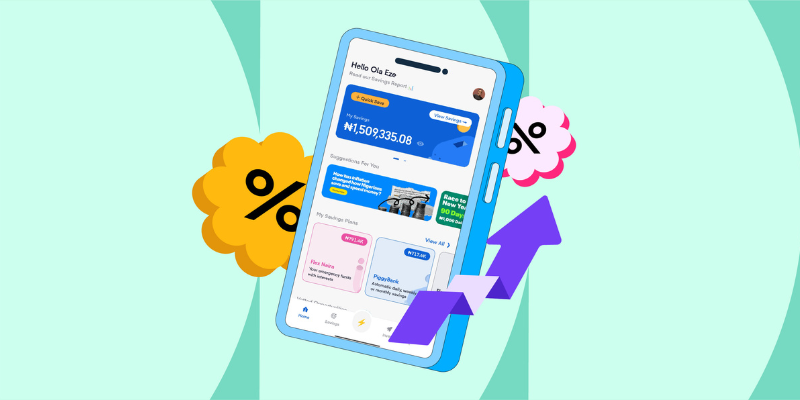
As a PiggyVest user, understanding the implications of GDP and CPI rebasing can help you navigate your financial journey more effectively.
Here’s how it could affect your PiggyVest experience:
- It could lead to enhanced savings strategies. With a more accurate CPI reflecting true inflation rates, you can better assess the real value of your savings over time. This awareness can encourage you to adjust your savings habits using PiggyVest products that offer returns that match your financial goals.
- It could help you make more informed investment choices. A rebased GDP that includes emerging sectors provides a clearer picture of the economy’s growth areas. This information can guide you in selecting investment opportunities within PiggyVest that align with these expanding industries, potentially offering higher returns.
- It could help you optimise budgeting. Understanding the true inflation rate helps in creating realistic budgets and financial plans. By knowing how the cost of goods and services is changing, you can adjust your spending and saving habits accordingly while using PiggyVest’s tools to stay on track.
New to PiggyVest? That’s okay! We wrote a great explainer for making the most of your PiggyVest account. This comprehensive article can help turn you into a PiggyVest pro whether or not the rebasing happens!
Final thoughts
Rebasing Nigeria’s GDP and CPI is a crucial step toward aligning economic indicators with current realities. While it presents certain challenges, the benefits of having accurate and up-to-date economic data far outweigh the drawbacks.
As a PiggyVest user, staying informed about these changes ensures you’re better equipped to make smart financial decisions. That way, you’re about to take timely control of your finances with our tools — whether you’re saving or investing — and thrive in any economic climate.