
Ever feel like your salary performs a disappearing act faster than you can say “Sapa!”? You’re not alone. Whether you’re a student on a budget, a corper stretching your allawee, or a salary earner trying to make sense of it all, it can be a challenge to stay afloat in today’s Nigeria. But do you know that the secret to gaining control may lie in a simple (yet powerful) concept: understanding the difference between wants and needs.
Simply put, needs are essentials you can’t live without (like food and shelter) while wants are desirable extras that improve life but aren’t vital for survival (like dining out and vacations). Mastering this distinction is your first step towards smarter spending and achieving financial freedom.
Ready to finally control where your money goes instead of wondering where it went? Then this article is for you. Here, we’ll break down the difference between wants and needs in personal finance, show you why separating them is crucial, and guide you on how to correctly identify them, while using Piggyvest to budget effectively and save towards your goals. Let’s start with needs.
What are needs in personal finance?

Needs are the absolute essentials you require to live, function, and maintain your well-being in society. These are the non-negotiables in your budget — the real and non-negotiable expenses you must cover. Without them, your health, safety, or ability to earn an income would be seriously impacted.
In Nigeria, these needs typically include:
- Basic sustenance: These are essential food items like rice, beans, garri, yam, vegetables, and oil — the core ingredients to keep you fed and healthy.
- Shelter: This includes rent for a safe and decent place to live, as well as utility payments, like electricity bills or covering the cost of fuel (even if you own property).
- Essential transport: Transport costs are expenses incurred for commuting to work or school, including bus fares, keke or okada fares and petrol costs (if you own a vehicle).
- Functional clothing: These are basic, presentable clothes required for your job or daily life.
- Healthcare: Essential medications, necessary doctor’s appointments, and basic health insurance (like the National Health Insurance Scheme offered by the NHIA) are all part of healthcare needs.
- Basic communication: A functional phone and sufficient airtime and data for essential calls, messages, and necessary online access (for work or school) are also necessities.
As you can see, needs form the bedrock of your existence and financial stability. Therefore, they must always come first.

What are wants in personal finance?

Wants are the desires that add flavour, comfort, and enjoyment to life but aren’t necessary for your survival or basic functioning. Think of them as the upgrades or extras you choose. They make living worthwhile and range from the small indulgences to the big splurges.
Let’s be real, living in Nigeria comes with its pressures and aspirations — that latest iPhone drop, the envy-inducing Aso Ebi for a friend’s wedding, or even just regular night outs to keep up with friends. These are often wants.
Here are some more examples of wants:
How to Fully Recover from a Financial Setback in Nigeria

- Premium gadgets and subscriptions: Think of things like upgrading to the newest smartphone when your current one works perfectly, that DSTV Premium subscription for all the channels, or multiple streaming services.
- Fashion and lifestyle: We’re not talking about essentials here. These are designer clothes, frequent shopping for trendy items beyond basic necessities, and expensive accessories.
- Dining and entertainment: Regularly eating out at pricey restaurants, frequent visits to the cinema or clubs, and weekend enjoyment that strains the wallet.
- Convenience: Relying heavily on ride-sharing apps for most trips instead of more affordable options and ordering food delivery often.
- Aspirational purchases: A car that’s more luxurious than you need for commuting or moving to a significantly more expensive neighbourhood for prestige rather than necessity.
As we noted in our article on discretionary expenses, wants aren’t inherently bad. In fact, they make life more enjoyable! The key is indulging with discretion so they don’t derail your financial stability.

What is the difference between wants and needs?

While we’ve defined them, seeing a direct comparison can make the distinction crystal clear.
So, here’s a table highlighting the key differences between wants and needs:
| Feature | Needs | Wants |
| Necessity | They are essential to your survival and basic function. | They are desirable, but not essential for your survival. |
| Impact, if unmet | It can negatively affect your health, safety, and productivity at work. | It can cause disappointment or inconvenience. |
| Nature | They are often constant and fundamental. | Wants are often variable, based on desire and depend on your lifestyle. |
| Examples | Basic food, rent, utilities, and transport. | Gadgets, dining out, vacations, and fashion. |
| Budget focus | You must prioritise them when creating a budget. | You address these after your needs and savings are covered. |
But what exactly is the point of knowing these differences?
What are the benefits of separating wants from needs?

Taking the time to consciously differentiate between your wants and needs isn’t just about labelling expenses — it unlocks significant advantages for your financial well-being.
Here’s why separating your wants from needs can be so powerful:
Level Up Your Money Game At The Zikoko x Piggyvest Naira Life Conference This August!

- It puts you in control. As personal finance educator, Oluchukwu Chiadika of Your Personal Finance Girl put it, “A lot of us aren’t broke — we’re just spending like everything is urgent. The minute you get clear on what’s truly essential, your money starts to stretch. You stop feeling guilty for spending, and you start being intentional.“
- It curbs impulse spending. When you pause to ask “Is this a need or a want?”, you break the cycle of impulsive purchases driven by trends or emotions.
- It accelerates savings goals. Identifying wants allows you to see where you can cut back, freeing up cash for what truly matters — an emergency fund, Japa savings, school fees, or starting that side hustle.
- It enables smarter financial decisions. Clarity on priorities guides better choices about loans, investments, and major life purchases. Therefore, separating needs and wants allow you to align your spending with your true priorities.
- It builds financial discipline. The regular habit of evaluating spending fosters discipline — a cornerstone of long-term financial health and stability.
Now, is there a way to easily identify your needs and wants when spending or budgeting?
How to identify your wants and needs when budgeting

Knowing what needs and wants are is elementary. The real magic happens when you apply this understanding to create a balanced budget and make better financial decisions.
Here’s a quick checklist for differentiating wants from needs to build a budget that truly works for you:
How To Stop Gambling: 8 Practical Tips For Regaining Control And Saving Money

- Track everything: For at least one month, track every single Naira you spend. Use a notebook, an app, or a simple spreadsheet. Don’t judge or fuss, just record.
- Review your spending list and perform a financial self-assessment by asking yourself the tough questions: For each item, honestly answer questions about how each transaction relates to your survival, its function, and if a cheaper alternative exists.
- Categorise your spending into buckets: Based on your answers, label each expense as a “need” or a “want”. But be strict! That daily suya snack? Likely a want. Basic transport to work? A need.
- Build your budget foundation. Sum up your total monthly needs. This is your baseline survival number — the absolute minimum you must cover in your budget.
- Allocate for savings and debt: Determine your savings goals (for example, an emergency fund or rent) and debt repayment commitments. Treat these like needs if possible, especially high-interest debt (like payday loans) and essential savings. Remember Warren Buffett’s advice: “Do not save what is left after spending; instead, spend what is left after saving.”
- Plan for wants. Subtract your needs and savings amounts from your total income. What’s left over is what you can choose to spend on your wants.
Now, you have a budget that works for you!
This budgeting method is ideal for all income levels, but it’s slightly similar to the 50/30/20 rule we’ve written about multiple times. However, instead of just delegating 50% of your income to needs, 30% to wants and 20% to savings, this approach considers your current financial situation and allows you to build from there.

How Piggyvest can turn your budget plans into financial wins

Identifying your wants and needs and creating a budget is crucial, but consistent execution is where real progress happens. This is where Piggyvest shines. We offer practical tools and wallets that can help with your financial plans.
Here’s how to save and budget with Piggyvest while considering your wants and needs:
- Automate savings with PiggyBank and earn up to 18% per annum. Once you know how much you can save (your 20% or another target), use PiggyBank’s Autosave to automatically transfer that amount from your account on payday. Target specific goals like “Emergency Fund” or “My first 1 Million.” This makes saving effortless and prioritises it.
- Manage your wants budget with Flex Naira and get up to 12% yearly interest. Decided you can spend ₦30,000 on wants this month? Transfer that amount to your Flex Naira wallet. Use this account for planned outings, entertainment, or other non-essentials. When it’s empty, your wants spending stops — meaning you can avoid overspending without complex tracking.
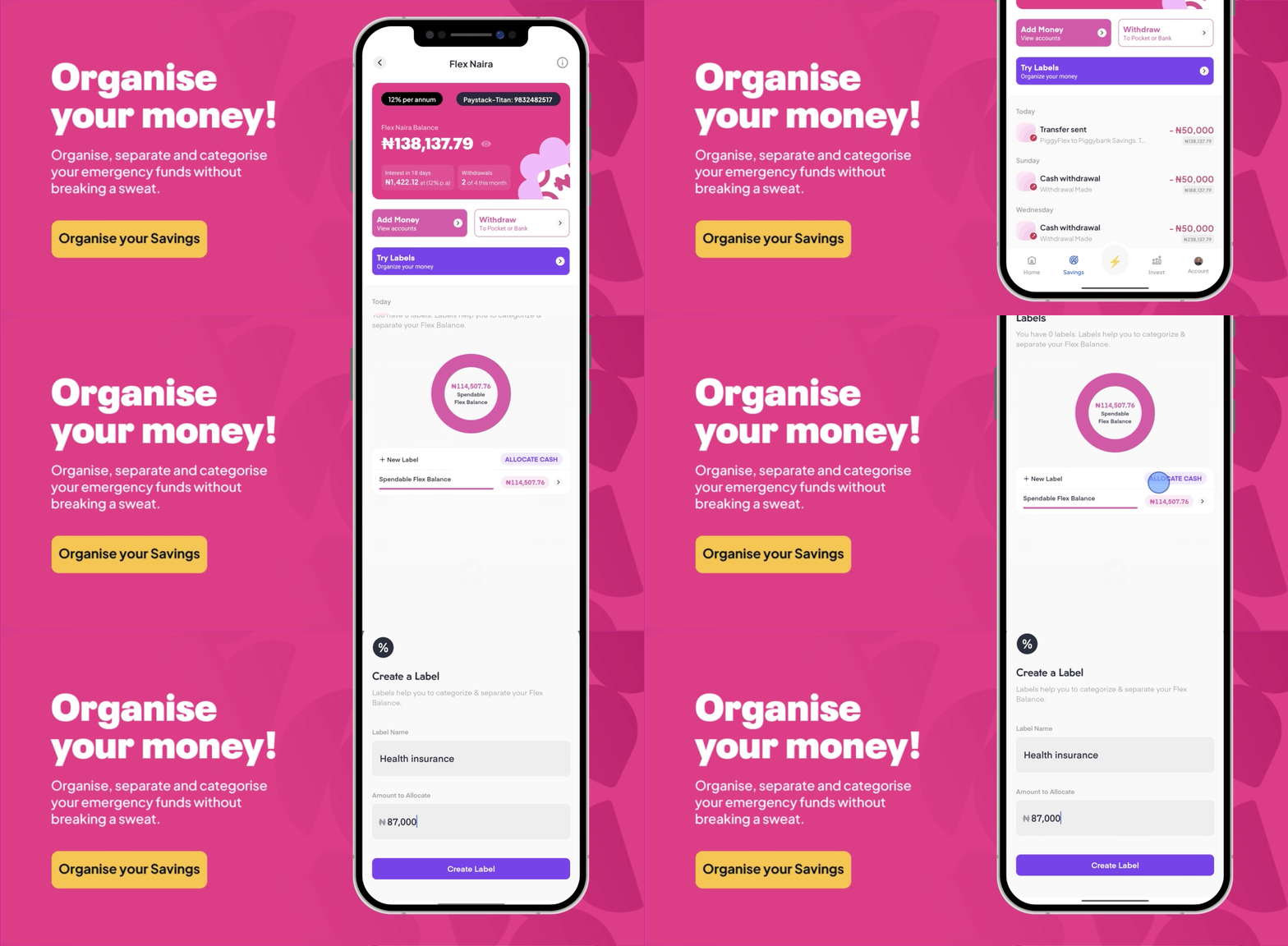
- Visualise your spending with Labels and PocketApp: Use the PocketApp transaction history tool as well as Labels on Piggyvest to categorise all transactions instantly as “need” or “want”. This helps you see clearly where your money is going and stay accountable to your budget.
- Handle your house and rent with HouseMoney™. Coordinate and manage your house and home-related expenses (particularly rent, which is a need) easily by using HouseMoney™.
- Use Target Savings to boost motivation and earn 13% yearly. Need an extra push to cut back on wants or better budget for them? Set up a Target Savings on Piggyvest — alone or with a group.
The simple truth is that Piggyvest turns your budget from a piece of paper into an active financial management system, and we can help you build the discipline needed to reach your goals.
The bottom line
Understanding the fundamental difference between what you need to survive and what you desire to enjoy is the cornerstone of sound financial management. It’s also the key to unlocking control over your money, especially amidst the economic realities of living in Nigeria.
By consciously separating wants from needs, creating a budget based on this understanding, and using Piggyvest to automate savings and manage spending, you can start building a more secure and empowered financial future.
The articles on the Piggyvest Blog are developed by seasoned writers who use original sources like authoritative websites, news articles and academic journals to perform in-depth research. An experienced editor fact-checks every piece before it is published to ensure you are always reading accurate, up-to-date and balanced content.
- Springer Nature Link: Needs and Wants
- Wiley Online Library: Needs and Wants
- ProQuest: Needs and Wants